7 Days in Kenya: The Perfect First-Time Itinerary

Some links may earn us a commission, at no extra cost to you. How we’re funded ↗
This 7 Days in Kenya: First-Time Visitor Itinerary combines Nairobi, Amboseli National Park, Lake Naivasha and the Maasai Mara. Spend day one exploring Nairobi, days two and three beneath Amboseli’s views of Mount Kilimanjaro, day four at Naivasha, days five and six on safari in the Mara, and day seven returning to Nairobi.

Kenya’s first-time itinerary combines Nairobi’s city energy with classic safari landscapes.
It is an ambitious but rewarding route, with wildlife drives, Rift Valley scenery and time to experience the capital. Expect an early departure from Amboseli on day four and another long drive from Naivasha to the Maasai Mara. Before travelling, arrange mobile data through an Airalo Kenya eSIM or a safari eSIM for Kenya.
The itinerary works best with pre-arranged park transfers or a private driver, particularly outside Nairobi. Pack light layers, sun protection, binoculars and a warm jacket for cool early-morning game drives. Weather and wildlife conditions vary through the year, so check the best time to visit Kenya for safari before confirming your dates.
Is Seven Days in Kenya Enough? Your Route at a Glance
Seven days is enough for a rewarding first visit if you keep the route focused. Rather than combining several distant parks with the coast, use Nairobi as your arrival base, add Lake Naivasha for a slower Rift Valley stop, then spend two nights in the Maasai Mara. This gives you city time, varied scenery and proper game drives without changing accommodation every night.
Day 1: Arrive at JKIA, transfer to your Nairobi hotel and rest.
Day 2: Explore Nairobi’s wildlife, cultural or food attractions.
Day 3: Travel to Lake Naivasha for a lakeside afternoon.
Day 4: Continue to the Maasai Mara and take an afternoon game drive.
Day 5: Spend a full day on safari in the reserve or a neighbouring conservancy.
Day 6: Return to Nairobi and stay near the airport or your preferred city area.
Day 7: Fly home or continue to another Kenyan destination.
Road transfers take up a meaningful part of the week, so avoid adding Amboseli, Tsavo and the coast to this same plan. If wildlife is your priority, consider seasonal conditions before fixing your dates. Travellers who prefer beaches can replace Naivasha and the Mara with a short domestic flight to the coast.
When Is the Best Time to Follow This Kenya Itinerary?
The easiest months for a first visit are generally June to October, when many safari areas are dry, vegetation is thinner and wildlife gathers near permanent water. January and February also offer warm, mostly dry conditions in many regions. July to October can coincide with wildebeest movement in the Maasai Mara, although river crossings are unpredictable and should never be treated as guaranteed. Consider these seasonal trade-offs when choosing your dates.
March to May usually brings the long rains. Heavy showers can make unsealed roads muddy, extend driving times and occasionally disrupt small-aircraft schedules. However, landscapes are green, birdlife is excellent and popular parks may feel less crowded. The shorter rains commonly arrive between October and December, often as intense afternoon or evening showers rather than continuous rain.
Kenya’s weather varies by altitude and region. Nairobi and the central highlands can feel cool after sunset, while the coast remains warmer and more humid. Pack light layers, sun protection and a waterproof jacket in any season. During wetter months, avoid tight same-day connections and leave extra time before your international flight.
What Should You Arrange Before Travelling to Kenya?
Start with the essentials: confirm your passport validity and check Kenya’s current entry requirements for your nationality. Apply for any required travel authorisation early, then save printed and offline copies of your passport, approval documents, flight details and travel insurance. Ask a qualified health professional about recommended vaccinations and whether your route requires a yellow fever certificate, particularly if you are arriving from or transiting through another country.
Book your first night’s accommodation, airport transfer and any fixed-date safari before departure. For a seven-day trip, advance reservations reduce the risk of losing time comparing lodges, finding transport or rearranging park visits after arrival. Share your itinerary with someone at home and keep the contact details for each hotel, driver and tour operator in one offline note.
Arrange mobile data before flying so you can contact your driver, open maps and retrieve bookings as soon as you land. If considering an eSIM, check that your phone supports the technology, is network-unlocked and can use dual SIM if you want to retain your usual number. Also carry a payment card, some backup cash and a power bank.
Days 1–2: Discover Nairobi’s Wildlife, Culture and Food
Day 1: Ease into the trip after arriving in Nairobi. Spend the morning at Nairobi National Park, where game drives can reveal lions, giraffes, rhinos and buffalo against the city skyline. Continue to the nearby Giraffe Centre, then have lunch in Karen. In the afternoon, visit the Karen Blixen Museum or browse local crafts at a reputable fixed-price shop. Keep the evening relaxed with dinner near your hotel.
Day 2: Explore central Nairobi with a local guide, taking in landmarks such as the Kenyatta International Convention Centre, City Market and the National Archives. For lunch, try Kenyan favourites such as nyama choma, ugali, sukuma wiki or a Swahili-style stew. Later, visit the Nairobi National Museum for an introduction to Kenya’s history, cultures and wildlife. Traffic can be slow, so avoid packing too many stops into one day. Use a hotel transfer or established ride-hailing service, especially after dark, and keep phones and cameras discreet in crowded areas. This practical Kenya safety guide explains sensible precautions in more detail.
Days 3–5: Experience a Masai Mara Safari
Day 3: Leave Nairobi early for the Maasai Mara National Reserve. The road journey takes up much of the day, so carry water and keep a light jacket within reach. After checking in and having lunch, take an afternoon game drive to look for elephants, giraffes, antelopes and big cats before sunset.
Day 4: Begin with a dawn game drive, when temperatures are cooler and wildlife is often more active. Return to camp for breakfast and rest during the hotter midday hours, then head out again in the afternoon. Ask your guide to vary the route rather than chasing only the Big Five; smaller sightings, birdlife and open savannah scenery are equally rewarding. Pack binoculars, sun protection and a scarf for dust.
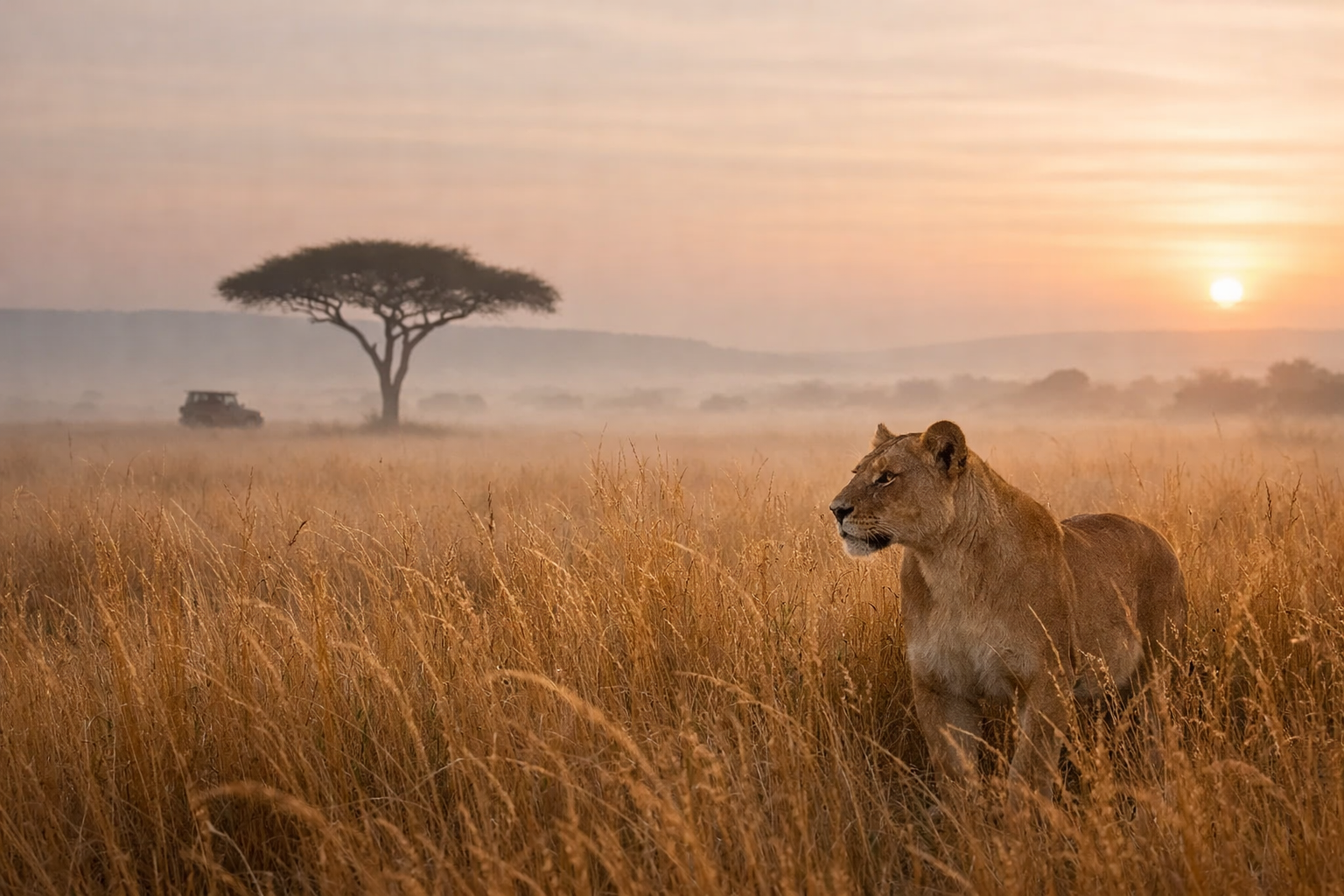
Early morning is one of the most rewarding times for a game drive in the Maasai Mara.
Day 5: Take a final early drive, have breakfast and begin the return to Nairobi. A flight saves road time, while driving offers more countryside views but requires patience. Mobile coverage may be patchy inside the reserve, and an eSIM will only work where a supported network is available. Download maps and lodge details before departure.
Day 6: Explore Lake Naivasha and the Great Rift Valley
Leave the Masai Mara after breakfast and travel towards Lake Naivasha, watching the landscape change from open plains to farmland and the steep escarpments of the Great Rift Valley. Stop at a viewpoint if weather conditions allow, then continue to your lakeside accommodation. The drive occupies much of the morning, so keep lunch plans flexible and avoid booking an early activity.
In the afternoon, take a boat trip on Lake Naivasha to look for hippos and waterbirds. Keep your hands inside the boat, follow the guide’s instructions and never approach hippos from the shore. You can combine the cruise with a guided walk on Crescent Island, where giraffes, zebras and antelopes may be seen at close range. Wildlife sightings and lake conditions vary with the season, so account for this when planning.
If you prefer a more active afternoon, visit Hell’s Gate National Park for hiking, cycling and dramatic volcanic scenery. Choose either Hell’s Gate or the lake excursion rather than rushing through both, then spend a relaxed final evening in Naivasha before returning to Nairobi on Day 7.
Day 7: Return to Nairobi and Prepare for Departure
Leave Naivasha after breakfast and keep the final day flexible, as traffic approaching Nairobi can be unpredictable. If your flight departs in the evening, ask your driver to take you directly to Jomo Kenyatta International Airport or arrange a secure luggage drop before a short final stop in the city. Avoid scheduling a major attraction today; a relaxed lunch, coffee stop or last-minute souvenir shopping is easier to manage.
Before leaving your hotel, confirm your terminal, airport transfer and airline check-in requirements. Travellers using the national carrier can review this practical Kenya Airways travel guide before departure. Allow a generous buffer for Nairobi traffic and arrive within the timeframe specified by your airline, particularly for an international flight.
Pack your passport, boarding documents, medication, valuables and charging cables in your hand luggage. Place liquids and sharp items in the correct bag, check your accommodation for chargers or travel adaptors, and download any boarding pass that may be needed offline. If your departure is early on Day 7, return to Nairobi on the previous evening and stay near the airport rather than risking a rushed transfer from Naivasha.
How Will You Travel Between Nairobi, Masai Mara and Naivasha?
A private safari vehicle with a driver-guide is the simplest option for this route. You use the same vehicle for the journey from Nairobi, game drives in the Masai Mara, the transfer to Naivasha and the final return to Nairobi. The Nairobi–Masai Mara drive commonly takes five to six hours, but rain, road conditions and stops can extend it. Leave early and carry water, snacks and a power bank.
Flying from Wilson Airport to a Masai Mara airstrip cuts the journey to roughly an hour. However, fares, baggage limits and transfers between the airstrip and your lodge require advance planning. It is also less convenient if Naivasha is your next stop, as you may need to fly back towards Nairobi before continuing by road. For a seven-day itinerary, driving usually creates a more direct circuit.
Allow about five to six hours from the Masai Mara to Naivasha and two to three hours from Naivasha to Nairobi, depending on traffic. Avoid scheduling an international departure immediately after a long road transfer. Use a reputable operator, confirm that the vehicle has working seat belts and avoid unnecessary night driving.
How Much Does One Week in Kenya Cost?
The cost of seven days in Kenya depends mainly on your safari package, accommodation and transport. For this six-night itinerary, budget for two Nairobi nights, three Masai Mara nights and one Naivasha night. A shared safari vehicle and simple tented camp will cost considerably less than a private vehicle, luxury lodge or fly-in safari. Solo travellers may also pay a single-room supplement, while couples and small groups can divide vehicle and guide costs.
Ask safari operators for an itemised quotation showing accommodation, meals, park entry fees, game drives, guide services and transfers. Confirm whether drinks, tips and optional activities are excluded. Separately allow for international or domestic flights, Nairobi meals, travel insurance, airport transfers and mobile data. If considering an eSIM, compare its total cost with your usual provider’s roaming charges before departure.
Keep a contingency amount for itinerary changes, medical needs and extra meals. When comparing quotations, use the same travel dates, room type and inclusions; a cheaper headline price may exclude park fees or transfers. Calculate the full trip in Kenyan shillings and check the payment currency to account for exchange-rate movements and card charges.
How Can You Stay Connected, Pay and Manage Local Time?
Arrange mobile data before departure so you can use maps, contact drivers and confirm accommodation immediately after landing. If your phone supports eSIM, compare suitable plans and install your chosen option while you still have reliable Wi-Fi. Keep it switched off until arrival, then enable data roaming for that line. Coverage is generally stronger in Nairobi and major towns; expect slower or intermittent service on remote safari roads. Download offline maps, booking details and emergency contacts before leaving Nairobi.
Kenya uses the Kenyan shilling (KES). Cards are commonly accepted at established hotels, shopping centres and larger restaurants, but cash remains useful for tips, markets, roadside stops and small purchases. Withdraw money from an ATM at a bank, airport or busy shopping centre rather than carrying a large amount. M-Pesa is widely used locally, although short-term visitors should not assume they can register or rely on it without a compatible Kenyan mobile line and the required identification.
Kenya follows East Africa Time, which is UTC+3 throughout the year, with no daylight-saving changes. Set your phone to update automatically, but confirm alarm times manually before early safari departures and your return flight.
Frequently Asked Questions About Spending 7 Days in Kenya
Is this itinerary suitable for children?
Yes, particularly for school-age children comfortable with early starts and several hours in a safari vehicle. Request family rooms, schedule rest breaks and carry snacks, sun hats and any essential medication.
Should I use a suitcase or a soft-sided bag?
A soft-sided holdall is easier to fit into safari vehicles and small aircraft. Confirm your operator’s baggage allowance before packing, as limits vary. Keep travel documents, medication, chargers and one change of clothes in your hand luggage.
How much cash should I carry?
Cards and mobile payments are widely useful in cities, but some markets, tips and small purchases require Kenyan shillings. Carry modest denominations rather than a large bundle, and divide cash between secure places.
Is a one-week Kenya trip safe for a first-time visitor?
Most trips run smoothly with sensible precautions. Use arranged transfers after dark, secure valuables, follow lodge guidance around wildlife and check current advice. This practical guide explains whether Kenya is safe to visit and how to reduce common risks.
Can I extend the itinerary?
Yes. Add two or three nights for the coast, Amboseli or another conservancy rather than squeezing an extra destination into seven days.
Keep the route focused, confirm bookings early and leave some breathing room for an enjoyable first visit.