Eating Vegetarian or Vegan in Kenya: A Traveler’s Guide
Some links may earn us a commission, at no extra cost to you. How we’re funded ↗
Eating Vegetarian or Vegan in Kenya is manageable when you know what to order and how to ask. Everyday favourites such as githeri, sukuma wiki, beans, rice, chapati and vegetable stews can provide filling meat-free meals, although recipes vary and may include meat stock, dairy or animal fat.
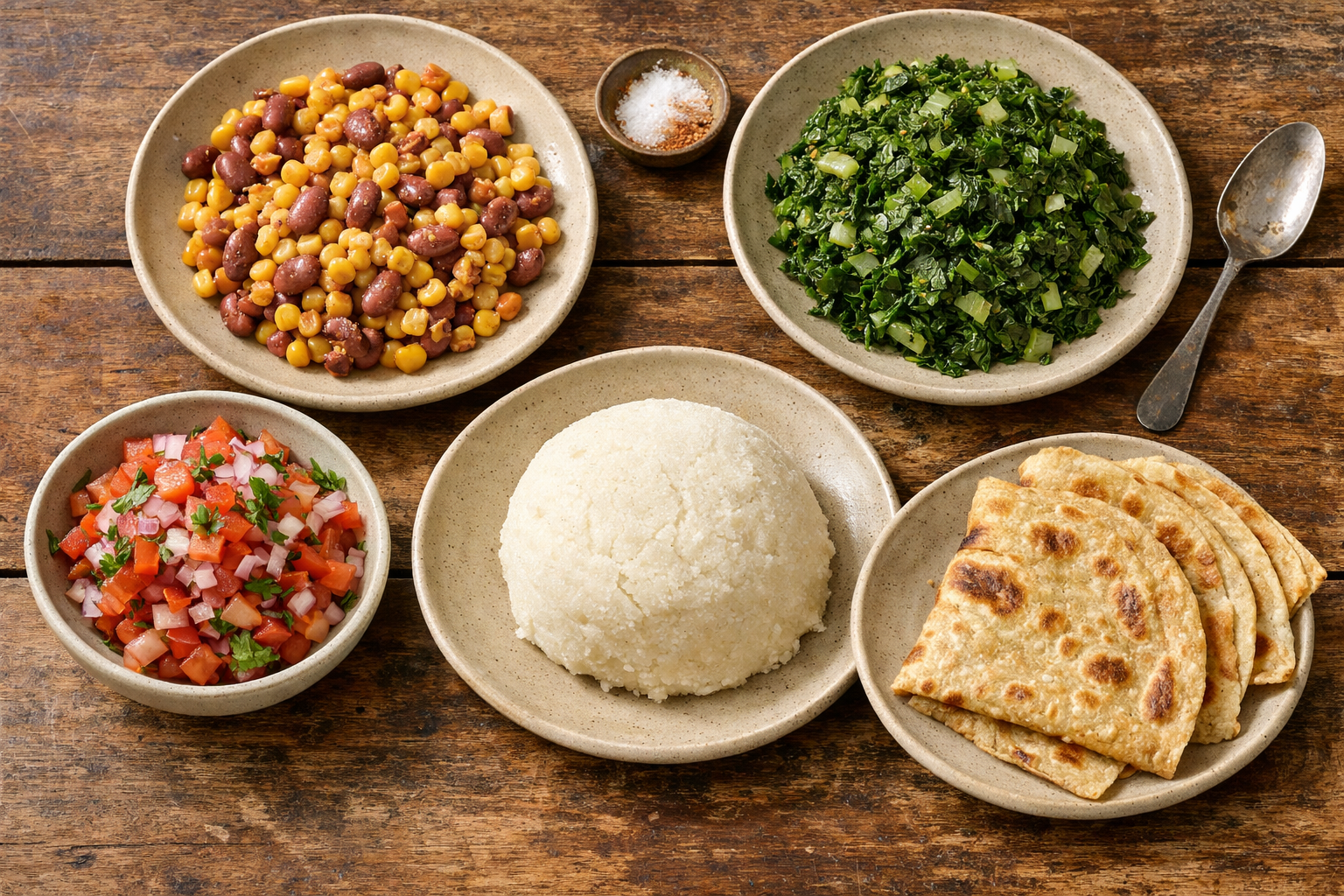
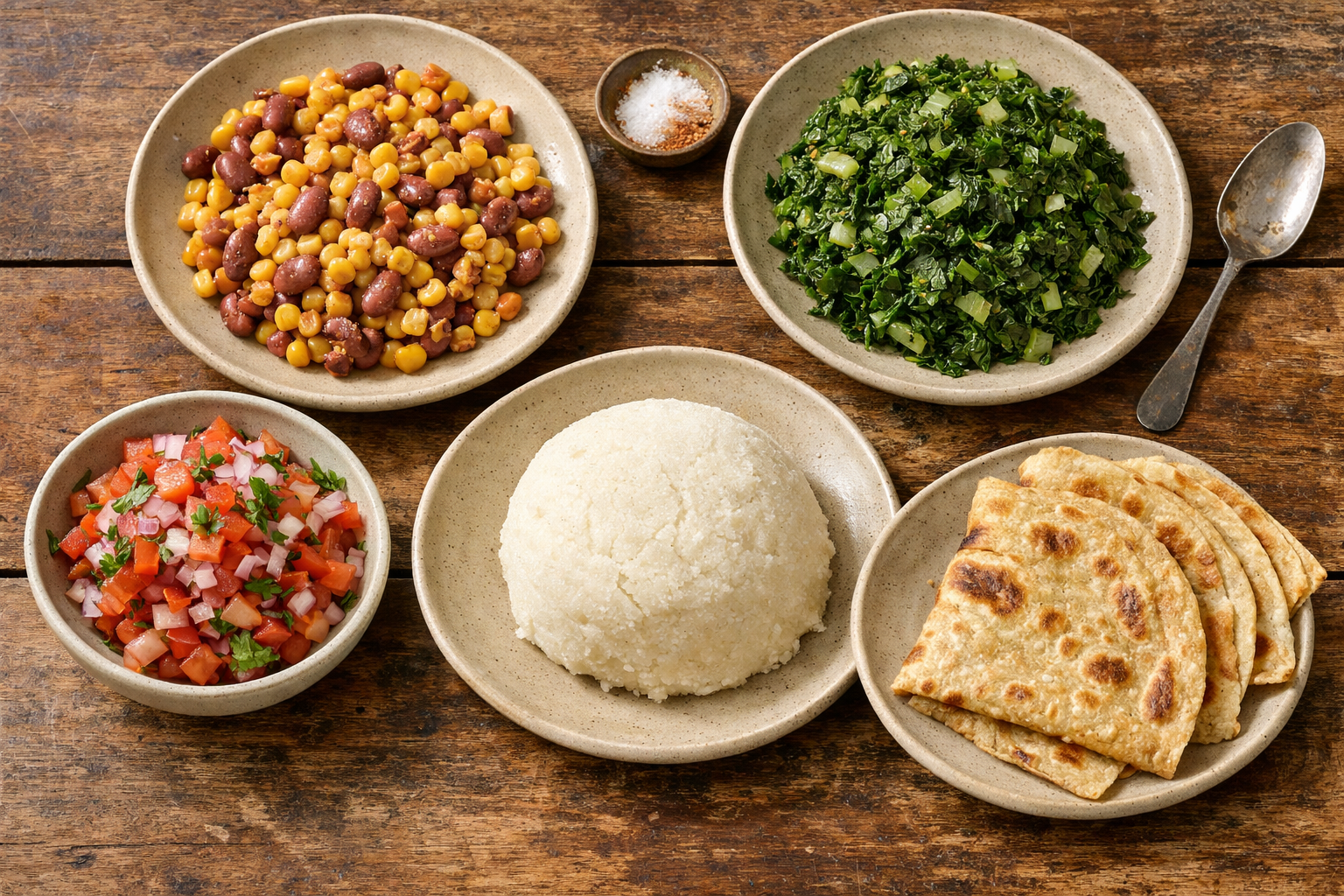
Plant-based Kenyan staples can make a filling everyday meal.
Vegetarians will generally have more choices than vegans, particularly at hotels, cafés and Indian restaurants. Vegans should confirm whether a dish contains eggs, milk, butter, ghee or stock. Asking for “no meat, fish, eggs or milk” is clearer than requesting “vegetarian food”, and travellers with allergies should also ask about shared pans and cooking oil. This guide to food in Kenya introduces more local dishes worth knowing.
For checking menus, maps and translations while travelling, an Airalo Kenya eSIM can provide mobile data without requiring a physical Kenyan SIM card.
Is Kenya Friendly for Vegetarian and Vegan Travellers?
Eating vegetarian or vegan in Kenya is generally manageable, particularly in Nairobi, Mombasa and other large towns. Vegetarian travellers can usually find filling meals built around beans, lentils, vegetables and maize. Vegan travellers may need to ask more questions because butter, milk, eggs or meat stock are not always obvious on a menu.
Useful local options include githeri, a mixture of maize and beans; ugali served with sukuma wiki; bean stew; green grams; and rice with vegetables. Chapati and vegetable samosas may also be suitable, but recipes and frying fats vary, so confirm the ingredients before ordering.
Choice is usually broader in tourist areas and restaurants serving Indian, Ethiopian or international cuisine. In smaller towns, simple combinations such as beans, rice, ugali and cooked greens are often the safest option. Allow extra time when ordering and be specific: say “no meat, fish, eggs or dairy” rather than relying only on the word vegan. Also ask whether vegetables or beans were cooked with meat stock. Self-catering is practical where supermarkets or produce markets are available.
What Is the Difference Between Vegetarian and Vegan Food?
The distinction matters when ordering Kenyan food: a vegetable dish may still contain butter, milk, meat stock or animal fat. Explain which ingredients you avoid rather than relying only on the word “vegetarian”.
What is the difference between vegan and vegetarian?
Vegetarians avoid meat, poultry and fish, but many eat eggs and dairy products. Vegans avoid all animal-derived ingredients, including eggs, milk, cheese, butter and honey. Requirements also vary at an individual level, so ask how a meal is prepared.
Food or ingredient | Vegetarian | Vegan |
|---|---|---|
Beans, maize and vegetables | Usually suitable | Usually suitable |
Eggs and dairy | Often suitable | Not suitable |
Meat or fish stock | Not suitable | Not suitable |
What is the most famous vegetarian dish?
In Kenya, githeri is one of the best-known vegetarian dishes. It combines boiled maize and beans, sometimes with potatoes, carrots, tomatoes or leafy greens. The basic version is vegan, filling and widely familiar, but some cooks add meat, stock cubes or animal fat. Ask whether it was cooked with any meat products before ordering.
Which Traditional Kenyan Dishes Are Naturally Plant-Based?
Several traditional Kenyan staples can be vegan. Ugali, a firm maize-meal dish cooked with water, is commonly served with sukuma wiki—collard greens or kale sautéed with tomato and onion. Kachumbari, a fresh mixture of tomato, onion, coriander and sometimes chilli, is another plant-based accompaniment.
Githeri combines boiled maize and beans, making it filling without meat or dairy. Recipes may include potatoes, carrots, cabbage or spices. Irio, associated with central Kenya, is a mash of potatoes, peas and maize; some cooks add butter or milk, so vegans should ask how it was prepared. Plain boiled arrowroot, sweet potatoes and cassava are also suitable options.
Other possibilities include green grams, often called ndengu, stewed with tomatoes and onions, plus bean stew served with rice or chapati. Chapati may be made with flour, water, salt and vegetable oil, but some recipes use ghee, milk or eggs. When ordering, ask whether the dish contains meat stock, butter or animal fat. A simple request such as “no meat, milk, eggs or meat stock” helps avoid misunderstandings.
Popular Kenyan Foods and Easy Vegan or Vegetarian Swaps
Many dishes can be adapted without losing their Kenyan character. Order vegetable pilau instead of a meat version, but ask whether the rice was cooked with meat stock. For biryani, request vegetables or beans and confirm that the sauce contains no yoghurt, butter or meat broth.
At a nyama choma restaurant, replace grilled meat with filling sides such as ugali, kachumbari, sukuma wiki and beans. Check whether the greens or beans were cooked with meat or stock. Learning the main dish names before ordering makes it easier to identify suitable combinations.
Street-food choices also need a few questions. Choose vegetable samosas rather than beef ones, and ask whether chips are fried separately from meat. Chapati may be made with vegetable oil, ghee or another fat, so vegans should confirm the ingredients. Mandazi recipes can include milk or eggs and should not be assumed vegan.
Simple substitutions work well at cafés and lodges: beans instead of meat in a stew, avocado instead of eggs in a sandwich, or coconut milk instead of dairy in a curry. Vegetarian travellers can add eggs or cheese where available, while vegans should clearly request no milk, butter, ghee, eggs or meat stock.
Where Can You Find Vegetarian and Vegan Food in Kenya?
Nairobi offers the widest choice, particularly in Westlands, Kilimani, Karen and the city centre. Indian restaurants are especially useful for meat-free meals, although vegans should ask whether dishes contain ghee, butter, cream or paneer. Mombasa and other coastal towns also have restaurants serving vegetable curries, coconut-based beans, rice and fresh fruit.
What food is most eaten in Kenya?
Ugali, a firm maize-meal staple, is one of the most commonly eaten foods in Kenya. It is usually served with vegetables, beans, meat or stew. Other everyday choices include rice, chapati, beans and sukuma wiki. Recognising these common dishes and their usual ingredients can make local menus easier to navigate.
In smaller towns, look for local cafés, hotel restaurants, supermarkets and fresh-produce markets rather than relying on dedicated vegan venues. Simple meals such as beans with rice, chapati with lentils, or ugali with cooked greens are often available. Confirm that vegetables were not cooked with meat stock and that beans do not contain animal fat.
Safari lodges and beach resorts can usually prepare vegetarian or vegan meals when told in advance. Give clear examples of what you avoid, especially eggs, dairy, fish and meat stock, since “vegetarian” may be interpreted differently by individual kitchens.
How to Order Vegan or Vegetarian Food in English and Swahili
In English, be specific rather than simply asking for “vegetarian food”. Say, “I do not eat meat or fish” or, for vegan meals, “I do not eat meat, fish, eggs, milk or butter.” Ask whether the dish contains meat stock, ghee or dairy, especially when ordering soups, stews and rice dishes.
Useful Swahili phrases include “Sili nyama” (I do not eat meat) and “Sili nyama wala samaki” (I eat neither meat nor fish). Vegans can say, “Sili nyama, samaki, mayai wala bidhaa za maziwa” (I do not eat meat, fish, eggs or dairy products). For a specific exclusion, use “bila”, meaning “without”: “bila maziwa” means without milk, while “bila mayai” means without eggs.
Before ordering, ask “Je, chakula hiki kina nyama?” (Does this food contain meat?) or substitute maziwa for milk and mayai for eggs. Showing the ingredients on your phone can also prevent misunderstandings. English and Swahili are widely used, but learning a few phrases helps; this guide to languages spoken in Kenya provides useful context. Confirm your request again when the meal arrives, particularly at buffets or roadside restaurants.
Which Hidden Animal Ingredients Should You Ask About?
Even dishes that look plant-based may contain meat stock, milk, ghee, eggs or animal cooking fat. Ask whether beans, rice, soups, sauces and sukuma wiki were prepared with beef or chicken stock. Pilau may use meat broth, while chapati and mandazi can contain milk, ghee or eggs depending on the recipe.
Also check salad dressings, mayonnaise and creamy sauces. Strict vegans should ask about honey and whether food is fried in the same oil as meat or fish. Recipes vary between homes and restaurants, so confirm the ingredients rather than relying only on a dish’s name.
What did Gordon Ramsay say about vegans?
Gordon Ramsay previously mocked veganism, including joking that he was “allergic to vegans.” His public tone later changed: in 2018, while introducing a plant-based pizza, he wrote that he was “going to give this vegan thing a try.” His comments are entertainment rather than practical guidance for ordering food in Kenya.
When speaking with restaurant staff, be specific: “no meat, fish, eggs, milk, butter, ghee, stock or honey.” This is clearer than asking only whether a meal is vegan.
Shopping and Self-Catering for a Plant-Based Diet
Open-air markets and neighbourhood greengrocers are excellent places to source affordable plant-based ingredients. Look for tomatoes, onions, sukuma wiki, spinach, cabbage, avocados, bananas and seasonal fruit. Dry goods shops commonly stock rice, maize flour, lentils, beans, green grams and njahi, a type of black bean.
Large supermarkets in Nairobi, Mombasa and other major towns usually offer the widest choice of plant milks, tofu, nut butters and imported vegan products. Availability becomes less predictable in smaller towns, so buy specialist items before travelling to rural areas or national parks. For simpler meals, build your shopping list around staples such as rice, maize flour, lentils, beans and vegetables.
Check packaged-food labels for milk powder, whey, casein, eggs, gelatine, honey and animal fat. Stock cubes, instant noodles, biscuits and margarine may contain unexpected animal-derived ingredients. If the label is unclear, choose a simpler product with a short ingredient list.
Before booking self-catering accommodation, confirm that the kitchen has more than a kettle: ask about a fridge, hob, saucepan, frying pan, knife and chopping board. Carrying a small food container also makes it easier to store leftovers or pack lunch for day trips.
How to Arrange Vegetarian or Vegan Meals on Safari
Tell your tour operator or lodge about your diet when booking, not after arriving in camp. State whether you are vegetarian or fully vegan, and mention allergies separately. Ask the operator to add the requirement to every accommodation, game-drive lunch and transfer-day meal. Reconfirm directly with each camp shortly before arrival, especially on a multi-lodge itinerary.
Request specific meal examples rather than accepting a vague promise of “vegetarian options”. Suitable safari meals might include bean stew, lentil curry, vegetable pilau, chapati, pasta with tomato sauce or fruit with porridge. Suggesting practical alternatives made from ingredients the camp kitchen already stocks can help staff plan suitable meals.
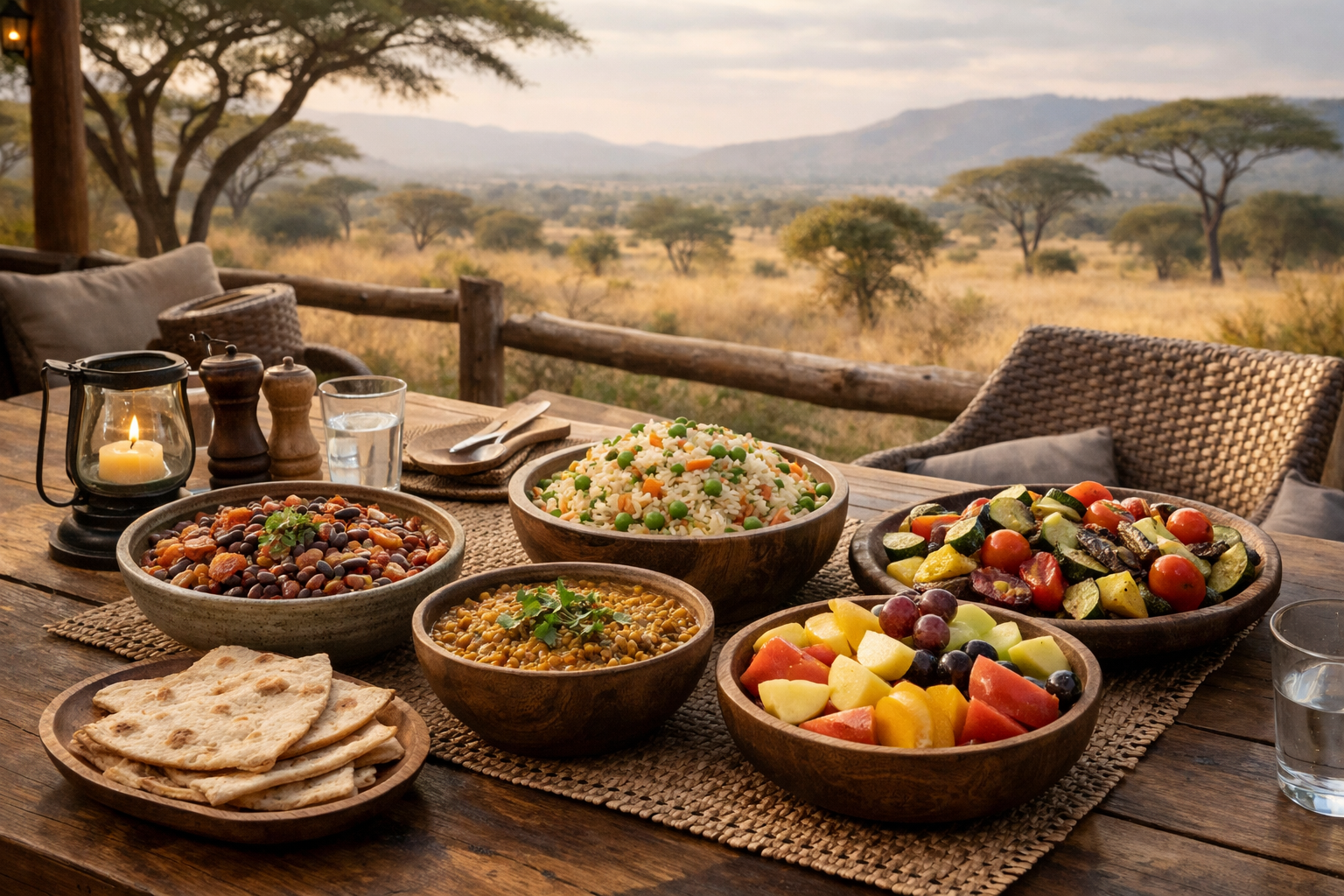
Request specific vegetarian or vegan meal examples when arranging safari catering.
For full-day game drives, ask what will be packed in the lunch box. A cheese sandwich, boiled egg or mayonnaise may be included unless vegan requirements are clearly recorded. Request a filling replacement such as a bean wrap, hummus sandwich, vegetable samosa, nuts or extra fruit.
Remote camps have limited supplies, so carry a small reserve of shelf-stable snacks. Also ask whether meals are buffet-style or prepared separately if cross-contact matters to you. On arrival, introduce yourself politely to the camp manager or chef and confirm the next day’s meals.
Food Safety, Nutrition and Typical Meal Costs
Choose busy eateries where food is cooked to order and served piping hot. Avoid salads, cut fruit and uncooked garnishes if you are unsure how they were washed; fruit you can peel yourself is a safer choice. Drink sealed bottled water or properly treated water, and check that reusable bottles have been cleaned before refilling.
For balanced plant-based meals, combine staples such as ugali, rice or chapati with beans, green grams, lentils or peas. Add sukuma wiki, spinach, cabbage or other vegetables, plus fruit when available. Vitamin C-rich foods such as oranges and tomatoes help with iron absorption. Strict vegans should plan a reliable vitamin B12 source, especially during a longer trip. This guide to food in Kenya provides more context on common dishes.
Local meals built around beans, vegetables and ugali are generally among the more affordable options. Prices rise at hotel restaurants, specialist vegan cafés, airports and safari lodges. Before ordering, check whether the menu price includes service charges or taxes, and ask whether extras such as avocado, plant milk or a side dish cost more. At camps and lodges, meals may be included in the accommodation rate, so confirm this when booking rather than budgeting separately.
Frequently Asked Questions About Eating Vegetarian or Vegan in Kenya
Should I book restaurant meals in advance?
Usually not in Nairobi, Mombasa or other large towns. However, contact small lodges, homestays and remote camps at least a day ahead. An Airalo Kenya eSIM can help you message the property before arrival and confirm what the kitchen can prepare.
Will restaurants understand the word “vegan”?
International restaurants generally will, but the term may be less familiar in small local eateries. Describe exactly what you cannot eat: no meat, fish, eggs, milk, butter or meat stock. Specific instructions are more reliable than relying on one label.
Can travellers with allergies or coeliac disease eat safely?
Options exist, but kitchens may share pans, grills, serving spoons and frying oil. State that your restriction is medical rather than a preference, ask about every ingredient, and carry a clearly written allergy card. Pack dependable snacks for long road journeys or remote stays.
Is it rude to decline food in a Kenyan home?
A polite explanation is normally enough. Thank your host, explain your dietary restriction early, and accept a suitable item such as fruit, tea without milk or a plant-based side if offered.
With clear communication and modest advance planning, eating vegetarian or vegan in Kenya can remain varied, sociable and manageable throughout your trip.