Is It Safe to Travel to Kenya? 2025 Safety Guide
Kenya is generally safe for travelers who take standard precautions. Most visitors explore Nairobi, coastal regions, and safari areas without incident. The main risks include petty theft in urban centers, isolated incidents of violent crime, and regional security concerns near the Somalia and South Sudan borders.
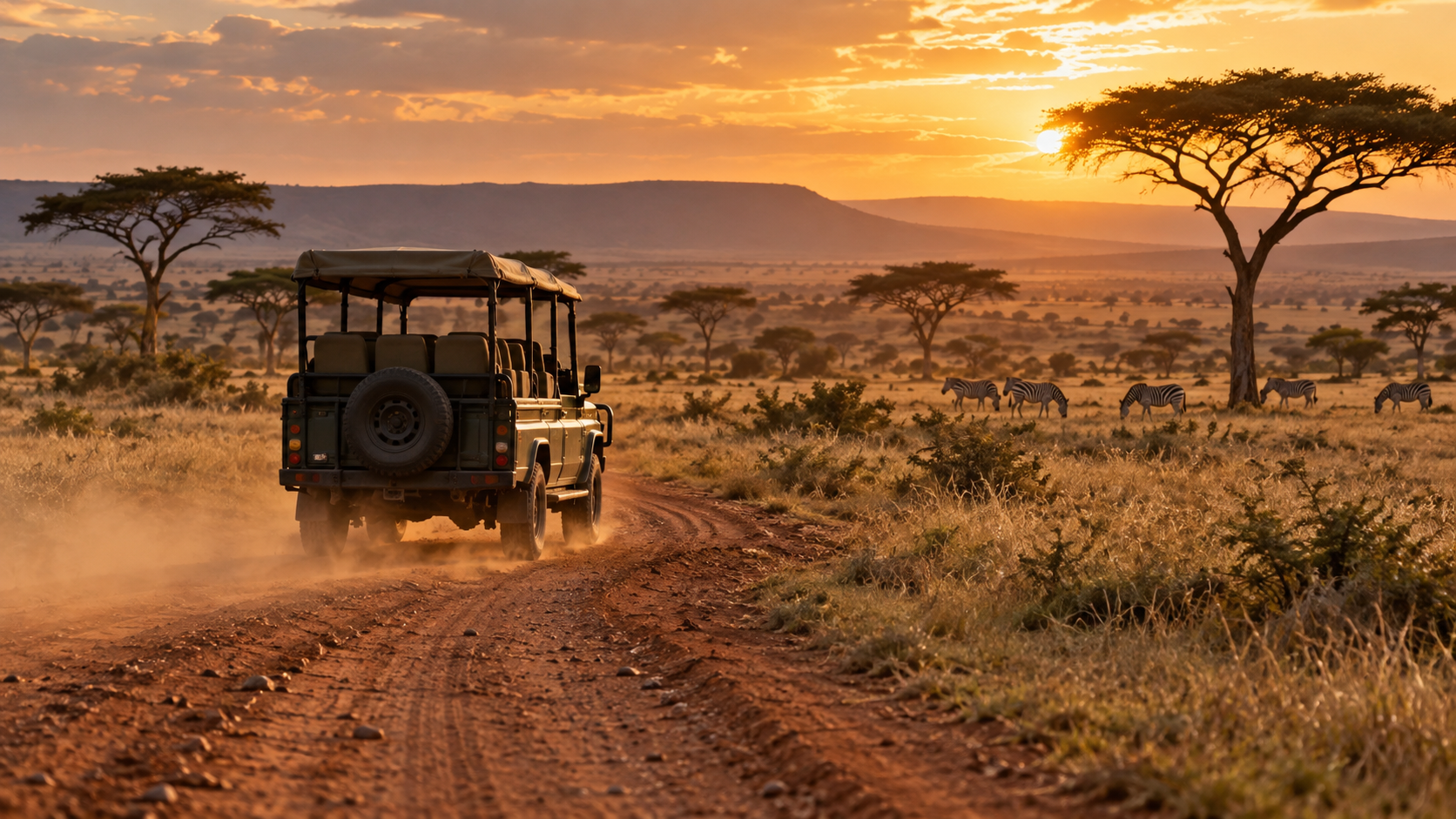
Established safari circuits are among Kenya’s best-supported travel routes.
Over 2 million tourists visit Kenya annually, with the vast majority experiencing safe trips. Nairobi's central business district and tourist neighborhoods like Westlands are well-policed during daylight hours. Popular safari destinations including the Maasai Mara, Amboseli, and Tsavo national parks maintain strong security protocols. Coastal areas like Diani Beach and Watamu see consistent tourist traffic with few safety issues.
Avoid travel within 60 kilometers of the Kenya-Somalia border, where terrorism and armed conflict pose elevated risks. Northern counties including Turkana, Mandera, and Garissa require careful planning. Stay informed through official travel advisories from the U.S. State Department and UK Foreign Office, which provide real-time security updates for specific regions.
The Short Answer: Most Tourist Routes Are Open, but Safety Depends on Location and Preparation
Kenya is safe for tourists who stick to established safari circuits, beach resorts, and major cities like Nairobi and Mombasa. Over 2 million international visitors traveled to Kenya in 2023, most without incident. The Kenya Tourism Board reports that crime against tourists occurs primarily in poorly lit urban areas and informal settlements, not in national parks or coastal hotels.
Risk concentrates near the Somalia and South Sudan borders—within 60 km of Mandera, Garissa, and Turkana counties—where the U.S. State Department maintains Level 4 "Do Not Travel" advisories. The Kenyan government restricts access to these zones and requires armed escorts for any authorized travel. Avoid these border regions entirely unless you have official clearance.
Your safety hinges on three factors: choosing low-risk areas, securing reliable health coverage, and maintaining mobile connectivity. Before departure, confirm Kenya visa entry requirements and set up an eSIM for Kenya so you can reach local emergency services and your embassy without hunting for a SIM card at the airport.
Current Kenya Travel Warnings: What Four Governments Say
The UK FCDO advises against all travel to areas within 60 km of the Kenya-Somalia border, Mandera County, and Lamu County (excluding Lamu Island and Manda Island). The US State Department maintains a Level 2 advisory for Kenya overall, citing terrorism and kidnapping risks, with Level 3 and 4 warnings for specific border regions. Canada and Australia echo similar restrictions on northeastern counties and the Somalia frontier.
All four governments clear central safari circuits—Masai Mara, Amboseli, Tsavo—and coastal areas including Diani Beach and Mombasa for normal travel. Nairobi carries a standard urban-crime warning but no blanket prohibition. The consistent message: tourist routes are open; avoid the far northeast and immediate border zones unless you have specific security arrangements.
Kenya Safety Map: Tourist Areas, Higher-Risk Counties and Border Regions to Avoid
Kenya's safety landscape varies sharply by region. Tourist circuits around Nairobi, the Masai Mara, Amboseli, Tsavo and the coast remain stable and well-policed. Downtown Nairobi's central business district and Westlands are generally safe during daylight, though you should avoid walking alone after dark.
Higher-risk areas include informal settlements in Nairobi such as Kibera and Mathare, where petty crime is common. Four northern and northeastern counties—Turkana, Marsabit, Garissa and Mandera—experience sporadic banditry and cross-border incidents. The U.S. State Department advises against travel within 100 kilometres of the Somalia border and near Dadaab refugee camps due to terrorism risk.
Border zones with Somalia and South Sudan see military activity and limited infrastructure. Unless you have specific security arrangements or are part of a humanitarian mission, skip these counties entirely. Stick to established safari routes and coastal resorts where incident rates are low and emergency services respond reliably. Staying connected helps—consider an eSIM for Kenya so you can reach local authorities or your embassy if plans change.
Staying Safe from Crime and Scams in Nairobi, Mombasa and Other Cities
Petty crime targets tourists in all major Kenyan cities. In Nairobi, avoid walking after dark in the central business district, Eastleigh, and most residential areas outside gated compounds. Take ride-hailing apps (Uber, Bolt) rather than street taxis, and keep car doors locked and windows up in traffic. Pickpockets work crowded markets and matatu (minibus) stations.
Common scams include fake tour operators at Jomo Kenyatta International Airport, overcharging for airport taxis (legitimate prepaid taxis cost KES 1,500–2,500 to central Nairobi), and "police officers" requesting passport checks or fines in cash. Real Kenyan police carry warrant cards with photo ID; ask to see the ID and call 999 or 112 to verify before paying any fine.
In Mombasa's Old Town and along Diani Beach, beach vendors and persistent guides are common but rarely dangerous. The UK Foreign Office advises against walking alone on beaches after dark. Store valuables in hotel safes, not in beach bags. Staying connected with reliable mobile data—such as an eSIM for Kenya—lets you access maps, ride-hailing apps, and emergency contacts without depending on public Wi-Fi.
Safari and Beach Safety in the Masai Mara, National Parks and Coastal Resorts
Kenya's wildlife reserves and coastal areas are carefully managed environments with well-established safety protocols. The Masai Mara, Amboseli, Tsavo and other national parks employ trained guides who enforce strict wildlife viewing distances—typically 25 metres for predators—and visitors must remain inside vehicles except at designated sites. Animal attacks are extremely rare when rules are followed; the Kenya Wildlife Service reports fewer than five serious incidents annually across all parks combined.
Coastal resorts in Diani, Watamu and Malindi maintain private security and work with local police to patrol beaches. Swimming is safest inside marked hotel zones where lifeguards monitor for rip currents, particularly during the May–October southeast monsoon. Avoid walking alone on isolated beach stretches after dark, and use hotel-arranged transport rather than unvetted beach taxis.
Book safaris and excursions only through Kenya Tourism Board-licensed operators who carry liability insurance and employ certified guides. Staying connected helps coordinate pickups and emergency contact; consider an eSIM for reliable mobile data across remote parks where local SIM coverage can be patchy.
Terrorism, Demonstrations and Breaking Kenya News: How to Monitor Disruptions
Kenya experiences periodic security incidents—most notably Al-Shabaab attacks near the Somali border and occasional protests in Nairobi and other cities. Travellers who monitor credible sources reduce their risk of being caught in sudden disruptions.
Check these official feeds daily during your trip:
U.S. Embassy Nairobi Security Alerts – Real-time warnings pushed via email when you enroll in STEP (Smart Traveler Enrollment Program)
UK Foreign Office travel advice for Kenya – Updated within hours of major incidents
Kenya Red Cross on X (formerly Twitter) – First responders often report road closures, explosions and crowd events before traditional media
Citizen TV Kenya and Nation Africa – Local newsrooms that break protest schedules and government statements
Avoid demonstrations entirely; even peaceful gatherings can escalate when police deploy tear gas. If you hear sirens or see crowds forming, walk calmly in the opposite direction and return to your accommodation. Staying connected with a reliable data plan ensures you receive push notifications and can contact your embassy if roads close unexpectedly.
Health Risks, Vaccinations, Malaria Prevention and Travel Insurance for Kenya
Yellow fever vaccination is mandatory if you're arriving from an endemic country and recommended for most travellers visiting rural Kenya. The CDC also advises routine vaccines (measles, tetanus) plus hepatitis A, typhoid and—for longer stays—hepatitis B and rabies. Proof of yellow fever vaccination may be checked at Jomo Kenyatta International Airport.
Malaria is present below 2,500 metres, including the coast, Rift Valley and western Kenya. The Nairobi city centre and highland safari lodges above that altitude are generally malaria-free. Take prophylaxis (Malarone, doxycycline or mefloquine) if visiting Mombasa, Lamu or Lake Victoria, use DEET repellent after dusk, and sleep under treated nets in rural areas.
Tap water is not safe to drink; buy bottled or use a filter. Street food poses a risk of traveller's diarrhoea—stick to hot, freshly cooked meals and peel fruit yourself.
Comprehensive travel insurance covering medical evacuation is essential. Kenya's private hospitals in Nairobi (Aga Khan, Nairobi Hospital) offer high standards, but emergency airlift to South Africa or Europe can cost $50,000–100,000 without cover. Verify your policy includes safari activities and motorbike rental if applicable, and download offline maps and your insurance details—mobile signal can fail in parks. An eSIM for Kenya keeps you reachable for telehealth or claims support across the country.
Road, Rail and Air Travel Safety, Including Kenya Airways and Local Transport
Kenya Airways maintains a strong safety record and is fully certified by international aviation authorities. Domestic flights to safari lodges and coastal towns operate reliably, though weather can delay small aircraft during the rainy seasons (March–May and October–December).
Road travel carries higher risk. Traffic accidents are a leading cause of injury for visitors, driven by poor road surfaces, unlit highways and variable driver behaviour. The Nairobi–Mombasa highway sees frequent crashes, especially at night. If hiring a car, choose a 4×4 for rural routes and never drive after dark outside city centres. Licensed taxis and ride-hailing apps (Uber, Bolt) are safer than informal matatus, which often speed and overload passengers.
The Standard Gauge Railway between Nairobi and Mombasa is modern, punctual and secure. Matatus and long-distance buses vary widely in safety—ask your hotel or lodge to recommend reputable operators. In remote areas, travel with a guide who knows current road conditions and local security. Staying connected with reliable mobile data ensures you can call for help or check real-time road updates if plans change.
Practical Advice for Solo Travellers, Women, Families and LGBTQ+ Visitors
Solo travellers should stick to established tourist circuits—Nairobi's Westlands and Karen suburbs, coastal resorts, and national parks with reputable operators. Share your itinerary with someone at home and avoid walking alone after dark in any Kenyan city.
Women travelling alone face occasional harassment in urban areas. Dress modestly outside beach resorts, use registered taxis rather than walking, and book accommodation in well-reviewed neighbourhoods. Coastal regions are generally more relaxed than rural conservative areas.
Families will find Kenya accommodating, with child-friendly lodges and malaria-free highland parks like Ol Pejeta. Monitor water and food hygiene closely, and ensure children stay connected with reliable mobile data during longer safaris.
LGBTQ+ visitors should exercise discretion. Same-sex relations remain illegal under Kenyan law, and public displays of affection can attract unwanted attention or risk. Urban hotels and safari camps frequented by international tourists are generally safe and professional.
Emergency Contacts and Staying Connected: Kenya Time, Mobile Data and Kenya eSIM Options
Kenya operates on East Africa Time (EAT, UTC+3) year-round with no daylight saving changes. Emergency numbers are 999 for police, 911 for general emergencies, and 112 from mobile phones. Save your country's embassy number before arrival—most maintain 24-hour duty lines for citizens in distress.
Item | Details |
|---|---|
Time zone | East Africa Time (EAT, UTC+3) year-round |
Daylight saving time | No daylight saving changes |
Police emergency number | 999 |
General emergency number | 911 |
Keep these essential Kenya contact details available while travelling.
Reliable mobile connectivity is a safety tool in Kenya. Safaricom covers 96% of the population with 4G in cities and most national parks; Airtel offers competitive rates in urban centres. A local data connection lets you access maps offline, call for help, monitor real-time travel advisories, and share your location with family. Avoid the €12–15 per GB roaming fees many European carriers charge—a Kenya eSIM activates in minutes, costs €4–8 for 3–10 GB, and works in dual-SIM mode so your home number stays reachable. Install it before you board; connectivity at JKIA is immediate, which matters if your luggage is delayed or you need a taxi at 3 a.m.
Pre-Departure Safety Checklist for Your Kenya Trip
Complete these steps before you board your flight to Kenya:
Register with your embassy — Enroll in your government's travel registration programme (STEP for Americans, subscribe for Britons) so they can reach you during emergencies or evacuations.
Check the latest travel advisories — Review US State Department, UK Foreign Office, and Australian government warnings for border areas and counties to avoid.
Get comprehensive travel insurance — Verify your policy covers medical evacuation (air ambulance from remote safari parks costs $50,000–$100,000), terrorism incidents, and trip cancellation due to unrest.
Complete vaccinations — Allow eight weeks for yellow fever, typhoid and hepatitis A jabs; carry your yellow fever certificate as Kenyan immigration checks on arrival.
Secure reliable connectivity — Order a Kenya eSIM before departure so you can access maps, emergency contacts and breaking news the moment you land.
Photocopy documents — Keep digital and physical copies of your passport, visa, insurance policy and vaccination records separate from the originals.
Frequently Asked Questions: Kenya Safety for Tourists in 2025
Is Kenya Safe for Tourists Now?
Yes, for visitors who stick to established tourist areas. The Masai Mara, Amboseli, Lake Nakuru, Diani Beach and Nairobi's central business district receive thousands of international tourists weekly without incident. The UK Foreign Office and US State Department both rate core safari circuits and coastal resorts as moderate risk, equivalent to dozens of other popular destinations. Risk increases sharply near the Somalia and South Sudan borders, in informal settlements and during political demonstrations.
Are There Travel Warnings for Kenya?
Partial warnings apply. The US, UK, Australia and Canada all advise against travel to counties within 60 km of the Somalia border—Mandera, Garissa, Lamu (except Lamu Island and Manda Island), and Tana River—due to terrorism risk. The UK also warns against Turkana's border with South Sudan. No government advises against travel to Nairobi, the Masai Mara, Amboseli, Tsavo, Samburu, Lake Nakuru or the coast south of Malindi. Check your government's current travel advisory before departure and register your trip.
Is Kenya Safe for UK Tourists?
Yes, within the areas covered by standard tour itineraries. More than 180,000 British nationals visit Kenya annually, and most trips are trouble-free. The UK government requires a valid Kenya eVisa or eTA, yellow fever vaccination if arriving from endemic countries, and comprehensive travel insurance covering medical evacuation. UK visitors should monitor FCDO updates, avoid political gatherings and register with the High Commission if staying longer than two weeks. Solo female UK travellers report fewer problems in Kenya than in many European cities, provided they follow local advice on transport and nightlife.
Is Kenya a High-Risk Country?
Not uniformly. Kenya spans low-risk tourism zones and high-risk border areas in the same country. Nairobi's rate of violent crime against tourists is lower than Johannesburg or Rio de Janeiro; safari lodges operate with security protocols that rival any international resort. However, counties bordering Somalia face active al-Shabaab cells, and informal settlements in Nairobi and Mombasa see gang violence that rarely affects visitors but raises the national crime average. Insurance underwriters and corporate travel managers classify Kenya as medium risk overall, permitting leisure and business travel to tourist areas with standard precautions. Stay connected with a local Kenya eSIM so you can reach emergency services and monitor local news in real time.

Kenya eSIM from $4.99 — Safari eSIM
Unlimited data on Safaricom. Built for safari travelers.
Get Safari eSIM