Botswana vs Kenya Safari: Which Is Better?
Some links may earn us a commission, at no extra cost to you. How we’re funded ↗
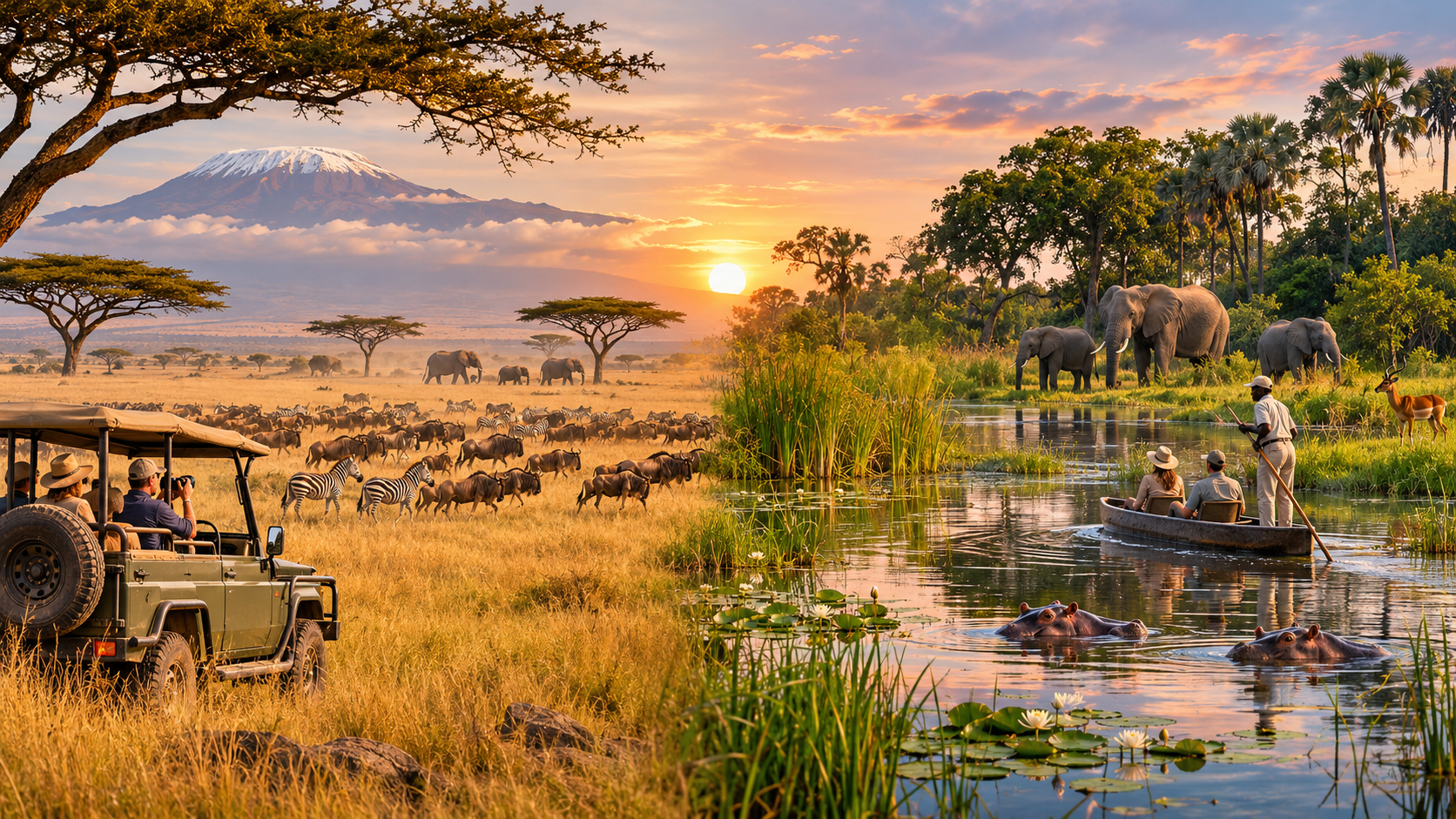
Botswana vs Kenya safari experiences differ significantly in accessibility, cost, and wildlife viewing style. Kenya offers easier access with direct flights to multiple airports, diverse ecosystems from savannah to coast, and budget options starting around $150 per person per day. Botswana focuses on exclusive, low-volume tourism with prices typically exceeding $500 per person per day, pristine wetlands in the Okavango Delta, and remote camps accessible mainly by light aircraft.
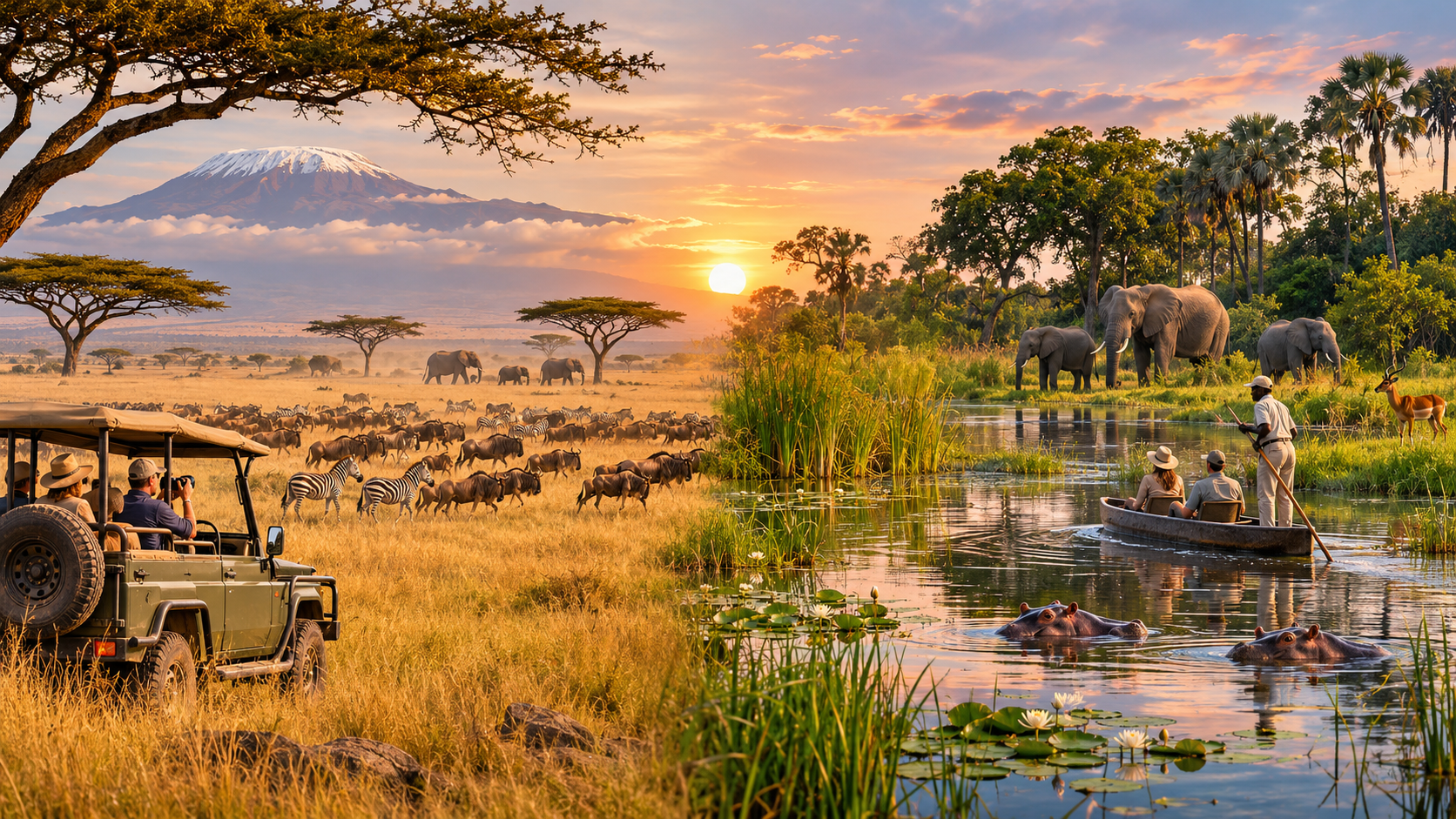
Kenya's parks concentrate wildlife year-round near permanent water sources, making game viewing reliable across seasons. The Maasai Mara hosts the Great Migration between roughly July and October, when around 1.3 million wildebeest plus large numbers of zebra and gazelle move into the Mara ecosystem from Tanzania. Amboseli, Tsavo, and Samburu offer varied landscapes and Big Five sightings within reach of Nairobi. Staying connected throughout your journey is straightforward with a safari eSIM for Kenya, ensuring you can share wildlife moments and navigate parks without hassle.
Botswana's Okavango Delta is a seasonally flooded inland delta whose annual flood pulse arrives during the dry season, creating waterways and floodplains that support exceptional wildlife concentrations. Chobe National Park is especially famous for very large elephant and Cape buffalo herds gathering along the Chobe River during the dry winter months. The country limits lodge construction and vehicle numbers per sighting, preserving a wilderness atmosphere that appeals to travelers prioritizing exclusivity over affordability.
Quick Verdict: Choose Kenya for Variety and Value, Botswana for Exclusivity
Kenya delivers exceptional value through diverse wildlife, accessible parks, and a well-developed tourism infrastructure that caters to every budget. Kenya's extensive protected-area network offers year-round wildlife viewing, with the Great Migration typically bringing roughly 1.3 million wildebeest plus hundreds of thousands of zebra and gazelle into the Maasai Mara ecosystem between July and October. You can also browse the Kenya Wildlife Service park network for official park information. Safari packages start at reasonable rates, and staying connected with a safari eSIM for Kenya helps you share your experiences without roaming charges.
Botswana takes a low-volume, high-cost approach that limits tourist numbers to preserve its pristine wilderness. The Okavango Delta and Chobe National Park provide intimate wildlife encounters, but expect to pay premium prices—luxury camps frequently exceed $800 per person per night, and the country actively discourages budget travel through its tourism policy. This exclusivity means fewer crowds but significantly higher costs across accommodation, park fees, and flights.
Which Is Richer, Kenya or Botswana?
Botswana has a substantially higher GDP per capita than Kenya. According to the World Bank's latest 2025 data, Botswana was about $7,778 per person versus about $2,363 for Kenya. However, Kenya's larger economy, diverse sectors, and extensive tourism infrastructure make it more accessible to travellers. Kenya's established safari industry means better flight connectivity, more accommodation choices, and competitive pricing that help stretch your budget further without sacrificing wildlife experiences.
What wildlife can you see in Kenya and Botswana?
Kenya's reputation rests on sheer concentration and variety. The Maasai Mara alone supports resident lion prides, leopard, cheetah and the annual wildebeest and zebra migration, while Amboseli is known for large elephant herds set against Kilimanjaro. Add Lake Nakuru and Tsavo, and travelers get several distinct ecosystems within the same national circuit; the Kenya Wildlife Service safari directory provides official details on these protected areas.
Botswana's wildlife experience is shaped by the Okavango Delta's seasonal flooding, which draws dense elephant populations, buffalo, and significant numbers of African wild dog, a species far scarcer in most Kenyan parks. Chobe National Park claims one of the continent's largest elephant concentrations, and the size of private concessions in Botswana often allows off-road tracking that Kenya's more regulated parks restrict.
Range matters too: Kenya's parks are smaller and more accessible for short trips, while Botswana's reserves cover vast, sparsely visited ranges suited to longer, slower safaris. Travelers combining parks should plan connectivity ahead, since a safari eSIM Kenya plan keeps navigation and park alerts working across remote reserves without relying on local SIM vendors.
How do their landscapes and safari experiences differ?
Kenya's safari landscape is dominated by open savannah. In the Maasai Mara, driving rules vary by zone and conservancy: the National Reserve's management framework restricts off-road driving, while some private conservancies permit controlled off-road viewing under specific codes of conduct. See the official Maasai Mara management plan for reserve rules. The terrain shifts across the country, from the Rift Valley's soda lakes to Amboseli's dusty plains beneath Kilimanjaro, giving travelers visual variety within a single two-week itinerary.
Botswana's defining feature is the Okavango Delta, a vast inland delta where the Okavango River spreads into the Kalahari rather than reaching the sea. Safaris here mix traditional game drives with water-based activities through seasonal and permanent channels; the Botswana Tourism Organisation's Okavango guide explains the delta's wetland and dryland environments.
Camp density also separates the two. Botswana's low-volume concession model often means fewer vehicles per sighting, while popular parts of the Mara can become busy in peak season. The Maasai Mara management plan sets visitor-management rules intended to reduce pressure on wildlife and habitats. Travelers planning remote stretches of the Mara or Delta should sort connectivity before departure — a safari eSIM Kenya keeps navigation and emergency contact working well outside town coverage, regardless of which landscape you choose.
Safari costs, park fees and accommodation compared
Botswana runs a high-cost, low-volume model. Government policy caps visitor numbers in reserves like Moremi and Chobe, so camps are smaller and pricier, with park fees and concession costs bundled into nightly rates that run well above the East African average. This suits travelers who want privacy and are not counting shillings or pounds per game drive.
Kenya spreads costs across a wider category of options, from budget campsites outside Maasai Mara to mid-range lodges and ultra-premium tented camps near the Mara River. Park entry fees are charged separately and vary by reserve and resident status, which lets travelers scale a trip up or down depending on season and lodge choice rather than committing to one fixed luxury tier.
Accommodation density also differs: Kenya has more properties clustered near key wildlife corridors, useful for travelers who want to switch camps mid-trip without long transfers, while Botswana's camps sit more remotely, often reached only by light aircraft. Those comparing specific Kenyan lodges before booking can check a rundown of resorts in Kenya for a sense of price bands and locations.
Whichever country you pick, confirm mobile data coverage near your camp before departure, since remote Botswana concessions and conservancy areas in Kenya both have patchy signal; a safari eSIM for Kenya solves this for lodges, transfers and border crossings alike.
When is the best time to visit each country?
Kenya's prime safari window commonly runs from late June through October, overlapping with the Great Migration's typical Mara season from around July to October. A second good stretch falls in January and February, when wildebeest calve on the southern Serengeti-Mara plains. Botswana works on a different clock: its dry season overlaps with the Okavango Delta's annual flood cycle, when floodwaters spread across seasonal plains and wildlife activity becomes closely tied to permanent and temporary water.
Botswana's green season, November to April, brings dramatic storms, newborn antelope and excellent birdlife, but some delta camps close due to flooding. Kenya's short and long rains (November and April) thin out crowds and drop camp rates without ruining game viewing in conservancies. Some Botswana operators schedule drives around the full moon cycle for predator activity, a detail worth checking before booking.
Which African country is the best for safaris?
Neither country wins outright; the better choice depends on timing flexibility and budget. Kenya suits travelers who want migration drama on a fixed July-to-October calendar, while Botswana rewards those who can plan around delta water levels year-round. Staying connected while comparing dates, camp calendars and local forecasts is simpler with a safari eSIM for Kenya active before departure.
Which destination is easier to reach and travel around?
Kenya has the stronger international gateway. Jomo Kenyatta International Airport in Nairobi is Kenya's main international gateway, while road and domestic-air connections link the capital with major safari regions. For example, the Kenya Wildlife Service Amboseli guide lists road approaches from Nairobi and access by light aircraft.
Botswana is harder to reach directly. Most visitors connect through Johannesburg before landing in Gaborone or Maun, and the Okavango Delta's camps sit beyond any road boundary, reachable only by light aircraft transfers that add cost and scheduling complexity to every leg of the trip.
Within Kenya, self-drive and shared shuttle options exist alongside private transfers, giving budget travelers more flexibility than Botswana's charter-dependent model allows. Staying connected while moving between parks matters for both navigation and bookings, and a dedicated safari eSIM for Kenya keeps maps and communication working across remote stretches where local networks are inconsistent. For travelers combining both countries or extending into Tanzania, regional data plans simplify border crossings considerably.
How safe are Kenya and Botswana for safari travellers?
Both countries have established safari industries, but travellers should check current official advisories because risks vary by region. The UK's FCDO currently publishes detailed, regularly updated guidance for Kenya and Botswana, including crime, terrorism, regional restrictions and other safety issues.
Which country is better for a safari, Kenya or Botswana?
Kenya suits travellers who want a large variety of parks, flexible budgets and strong tourism infrastructure, while Botswana appeals to those prioritising exclusivity and low-density wildlife viewing. Neither is objectively "better"; the choice depends on whether you value standard group-safari affordability or private, high-cost luxury camps.
Which country is better for a safari, Botswana or Tanzania?
Botswana offers more private, uncrowded concessions, whereas Tanzania (home of the Serengeti) provides larger herds and more dramatic migration scenes at a lower daily cost. Travellers wanting solitude lean Botswana; those chasing big-numbers wildlife spectacles lean Tanzania.
Kenya: Active tourist police units in major parks, dense lodge networks, mobile coverage in most reserves.
Botswana: Low tourist density, strict camp security protocols, remote fly-in camps with limited connectivity.
For staying reachable in remote conservancies, many visitors arrange a safari eSIM for Kenya before departure.
Staying connected on safari: mobile coverage, eSIMs and local time
Kenya has broad mobile-network population coverage, but service can still be patchy in remote wildlife areas. The Communications Authority of Kenya coverage geo-portal provides official network-coverage mapping. Botswana's camps in the Okavango Delta and Linyanti are more remote, and many rely on lodge satellite links or Wi-Fi rather than a dependable local network, so travellers often go hours without a personal connection between game drives.
For Kenya, the practical fix is setting up a data eSIM before departure rather than hunting for a local SIM counter after a long flight; it keeps maps, translation apps and family check-ins working across the wider range of parks and transit stops you'll pass through. Coverage planning matters as much as choosing a camp, and a dedicated safari esim kenya plan is built around exactly this pattern of moving between parks and towns.
Travellers combining both countries, or adding Tanzania's northern circuit, benefit from checking network expectations before booking transfers; a clear comparison of options is laid out in the Kenya tanzania esim page. Kenya and Botswana are only one hour apart: Kenya uses East Africa Time (UTC+3) while Botswana uses Central Africa Time (UTC+2). Confirm pickup times with your camp operator when crossing between them.
Which Destination Suits Families, Couples, Photographers and First-Timers?
Kenya works best for families and first-time safari-goers. Game drives in the Maasai Mara and Amboseli offer predictable wildlife sightings within half-day sessions, lodges provide family rooms and child-friendly activities, and flights from Nairobi reach most parks in under an hour. Malaria risk is lower in highland reserves, and medical facilities in Nairobi are among the best in East Africa. Couples seeking variety will find Kenya's mix of beach, mountain and savannah more diverse than Botswana's wetland focus.
Botswana suits experienced safari travellers and photographers willing to invest in exclusivity. The Okavango Delta's water-based safaris require patience—animals appear on their own timing, not a driver's schedule—and the small-camp model limits child-friendly infrastructure. Photographers benefit from Botswana's low vehicle density: you will not share a leopard sighting with six other trucks. Couples prioritising privacy over variety will appreciate the isolation, though the higher cost and longer travel times demand more commitment than Kenya's accessible circuit.
First-timers should start in Kenya unless budget exceeds $800 per person per night. The learning curve is gentler, the infrastructure more forgiving, and a safari eSIM keeps you connected across multiple parks without the connectivity gaps common in Botswana's remote camps.
Can You Combine Kenya or Botswana with Another African Destination?
Both Kenya and Botswana sit within established multi-country safari circuits. Kenya shares a land border with Tanzania, making it straightforward to pair a Maasai Mara visit with the Serengeti or Ngorongoro Crater. Entry requirements depend on nationality: check Kenya's official eTA portal and Tanzania's official eVisa system before travel. A Kenya Tanzania eSIM keeps you connected across the border without swapping SIM cards or losing your primary number.
Botswana borders four countries—South Africa, Namibia, Zimbabwe and Zambia—but combining destinations requires more planning. Victoria Falls sits on the Zambian and Zimbabwean sides, accessible via short flights or road transfers from Kasane. Chobe National Park pairs naturally with the falls, often on the same itinerary. The Okavango Delta and Moremi Game Reserve are remote wilderness destinations, and fly-in itineraries are common, although Moremi is also a well-known self-drive camping destination for suitably prepared travellers.
Network coverage in Kenya extends reliably along main routes into Tanzania, but drops significantly in Botswana's remote delta camps. Pre-purchased data keeps WhatsApp and maps working during overland crossings, particularly helpful when border formalities take longer than expected or you need to confirm onward bookings. Botswana combinations typically demand higher budgets due to flight-based logistics, while Kenya–Tanzania routes offer more self-drive and budget operator options.
Frequently asked questions about choosing an African safari
Is Botswana more expensive than Kenya for a safari?
Yes, considerably. Botswana's low-volume, high-value tourism model means park fees, accommodation and guided activities typically cost two to three times more than Kenya's equivalents. Daily budgets in Botswana commonly exceed $800 per person, while Kenya offers quality safari experiences from $200–$400 per day. Kenya's broader range of lodges, camps and self-drive options makes it accessible to mid-range travellers, whereas Botswana caters primarily to luxury and premium segments with all-inclusive fly-in camps.
Which country has better wildlife viewing opportunities?
Kenya offers broad ecosystem diversity and reliable wildlife viewing across multiple parks. The Great Migration typically reaches the Maasai Mara around July and remains through about October, although exact timing varies with rainfall. Amboseli, Samburu and Tsavo add elephants, unique northern species and varied terrain. Botswana's Okavango Delta and Chobe deliver exceptional water-based wildlife encounters and massive elephant herds, but seasonal flooding restricts access and concentrates game viewing into shorter windows. Both countries protect healthy big cat, elephant and plains game populations.
Can I combine a Kenya or Botswana safari with beach time?
Kenya pairs easily with Indian Ocean coast visits—Diani, Watamu and Lamu lie within short domestic flights of Nairobi. Botswana has no coastline; beach extensions require flights to Mozambique, Mauritius or Zanzibar, adding time and expense. Kenya's coast offers reef diving, dhow cruises and Swahili cultural sites. If you want a Kenya Tanzania eSIM for seamless connectivity across both safari and beach segments, activation before departure simplifies the transition between regions.