2 Days in Nairobi: The Perfect First-Time Itinerary

Some links may earn us a commission, at no extra cost to you. How we’re funded ↗
This 2 days in Nairobi itinerary combines wildlife, local history, food, and city life without rushing between too many stops. Spend your first day around Nairobi National Park and the Karen area, then use day two to explore central Nairobi, the National Museum, and the city’s restaurants and shops.
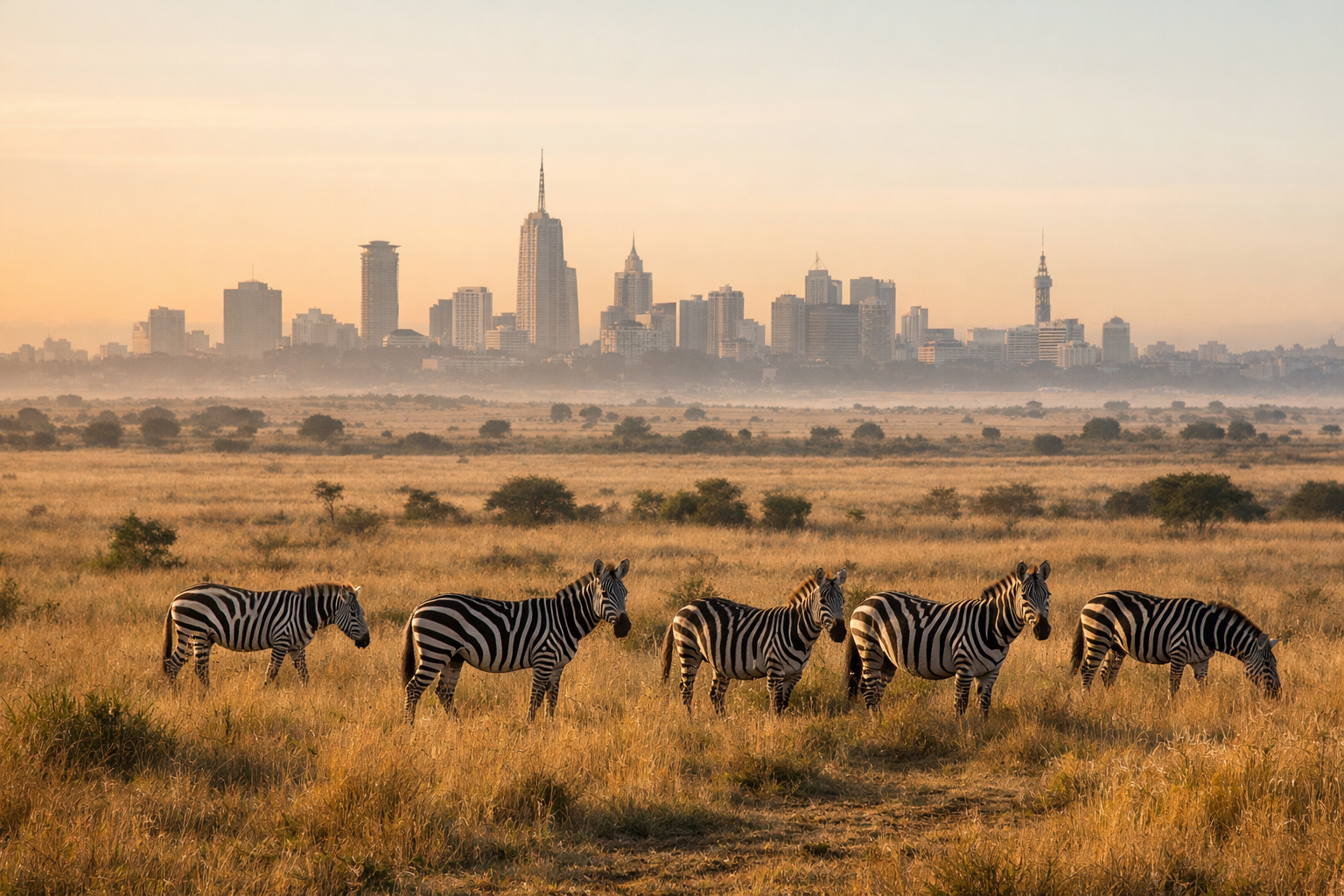
Nairobi National Park offers the rare sight of safari grassland set against the city skyline.
Start day one with an early game drive in Nairobi National Park, where the city skyline forms an unusual backdrop to open grassland. Continue to the Sheldrick Wildlife Trust elephant nursery if you have a reservation, followed by the Giraffe Centre and lunch in Karen. If time allows, visit the Karen Blixen Museum before returning to your hotel.
On day two, tour the Nairobi National Museum, then head downtown for landmarks such as the Kenyatta International Convention Centre and nearby government buildings. Finish with shopping at a craft market or an unhurried meal in Westlands. Nairobi traffic can make short distances take longer than expected, so group nearby attractions together, arrange transport in advance, and leave extra time before any evening reservation or airport transfer.
Is Two Days Enough to Experience Nairobi, Kenya?
Yes. Two days gives first-time visitors a rewarding introduction to Nairobi, provided the trip is organized by area rather than attempted as one long checklist.
Day 1 morning: Start at Nairobi National Park for an early game drive, when wildlife is active and the city skyline forms an unusual backdrop.
Day 1 afternoon: Continue to the nearby Giraffe Centre. Reserve timed activities in advance, then add the Karen Blixen Museum if your schedule allows.
Day 1 evening: Have dinner in Karen or return to your hotel before rush-hour traffic builds. Avoid scheduling another attraction across the city.
Day 2 morning: Visit the Nairobi National Museum to explore Kenya’s natural history, cultures, art, and archaeological heritage in one manageable stop.
Day 2 afternoon: Explore central Nairobi with a guide, or choose a quieter neighborhood experience built around local food, galleries, and coffee.
Day 2 evening: Finish with dinner and pack before any onward safari or beach journey. Confirm the next morning’s pickup location with your driver.
This Nairobi planning guide can help with connectivity and local preparation. Leave generous gaps between stops: traffic can quickly disrupt a tightly packed two-day itinerary.
Quick Schedule: Daily Stops, Travel Times, and Meal Breaks
Day 1, 6:00–10:30 a.m.: Start with an early drive through Nairobi National Park, when animals are generally easier to spot and city traffic is lighter.
10:30–11:30 a.m.: Leave time for the drive toward Karen. Traffic can quickly turn a short distance into a 45-minute journey.
Late morning: Visit the Sheldrick Wildlife Trust elephant nursery if you have secured the required advance booking. Confirm the current admission process and fees directly before traveling.
12:30–1:30 p.m.: Stop for lunch in Karen rather than crossing the city. A full hour gives you time to eat without rushing the next visit.
Afternoon: Continue to the Giraffe Centre, then choose the Karen Blixen Museum or relaxed shopping nearby. Return to your hotel before evening traffic peaks if possible.
Day 2, 9:00 a.m.–noon: Explore central Nairobi, combining the National Museum with a guided downtown walk or another cultural stop.
Noon–1:30 p.m.: Schedule lunch near Westlands or the museum to avoid an unnecessary cross-city drive.
Afternoon: Walk in Karura Forest or visit a local market, depending on the weather and your energy. Keep cash available for entrance fees and small purchases.
Evening: Reserve dinner near your accommodation. This two-day itinerary works best when each day stays within one side of the city.
Start your first full day beyond the airport with an early game drive in Nairobi National Park, when traffic is lighter and wildlife is often more active.
Arrange a driver with park experience rather than relying on several separate rides. International visitors should confirm current entry requirements before departure.
Bring water, sunscreen, binoculars and a light layer. Wildlife sightings are never guaranteed, so treat the landscape and city skyline as part of the experience.
After the drive, continue toward the elephant conservation visit. Book well ahead because visitor access may use limited sessions and advance reservations.
Midday: Elephant conservation visit and lunch
Afternoon: Giraffe Centre, followed by the hotel
Finish at the Giraffe Centre, where the raised platform offers close views and an educational introduction to giraffe conservation.
Ask your driver to group the southern Nairobi stops efficiently. Backtracking toward the city center can turn a relaxed park day into hours in traffic.
Before leaving your hotel, confirm your transport arrangements, save key locations, and make sure you have reliable mobile connectivity.
Return before evening rush hour if possible, then choose dinner near your accommodation. An early night makes Day 2 considerably easier.
Day 1 Evening: Where to Eat and Experience Nairobi After Dark
After returning from the wildlife stops, allow an hour at your accommodation to shower, change, and avoid turning dinner into another rushed appointment.
For an easy evening, choose one dining area—Westlands, Kilimani, or Karen—rather than crossing Nairobi twice in nighttime traffic.
Order a Kenyan dinner such as nyama choma with ugali and kachumbari, or grilled fish with sukuma wiki. Portions are often suitable for sharing.
If you still have energy, look for a rooftop lounge, live band, or relaxed cocktail bar nearby. Confirm that night’s program directly with the venue because schedules can change.
Westlands generally works well for a livelier night, while Karen suits travelers who prefer a quieter meal after a full safari-style day.
Arrange your return before leaving dinner. Use a reputable app-based ride or ask the restaurant or hotel to book a private driver, then verify the vehicle details.
Reliable mobile data helps with ride coordination and directions; travelers can review the Airalo Kenya eSIM option before departure.
Keep valuables discreet, avoid walking unfamiliar streets late at night, and ask your accommodation which nearby blocks are appropriate after dark.
If Nairobi is the first stop before a Kenya safari or onward travel to Tanzania, finish early and pack tonight. A well-rested second day is more valuable than squeezing in another venue.
Day 2: Museums, Local Culture, Markets and City Views
Start at 9:00 a.m. at the Nairobi National Museum, allowing about two hours for Kenya’s history, art, archaeology, and wildlife exhibits.
Before leaving, walk through the museum grounds or visit the adjoining Snake Park if reptiles interest you. Confirm current admission charges per person beforehand.
Around 11:30 a.m., take a taxi into the city center. Keep your phone and wallet secure while walking through busy downtown streets.
Browse City Market for carvings, beadwork, fabrics, and other local crafts. Ask before photographing vendors, and negotiate politely rather than aggressively.
Stop for lunch near the central business district at about 1:00 p.m. Budget at least an hour so the afternoon does not feel rushed.
Next, spend 60–90 minutes at the Nairobi Railway Museum, where locomotives, carriages, and displays explain the railway’s role in Kenya’s development.
Finish at the Kenyatta International Convention Centre observation deck if public access is available. The elevated city views help put Nairobi’s neighborhoods and surrounding landscape into perspective.

A high city viewpoint is a fitting final stop for seeing how Nairobi’s central neighborhoods connect.
Plan to return to your hotel by 5:30 p.m., before peak traffic intensifies. Save your accommodation details and essential destination information offline in case mobile service is unavailable.
Where Should You Stay for a Two-Day Nairobi Visit?
For this itinerary, choose a central base rather than an airport hotel. Staying near the day’s first stop reduces time in traffic and leaves more room for an early wildlife tour or evening meal.
Karen works well if Day 1 is your priority. It places you near the Giraffe Centre, elephant conservation sites, and the western entrances used for Nairobi National Park visits.
Karen feels quieter and more spread out, so confirm that your hotel can arrange a driver or help book reliable transportation.
Westlands offers the best balance for many first-time visitors. The area has a broad selection of hotels, restaurants, malls, and convenient pickup points for guided tours.
From Westlands, you can reach wildlife attractions on Day 1 and central museums, markets, and viewpoints on Day 2 without changing accommodations.
Kilimani or Hurlingham are practical alternatives, particularly if you prefer apartment-style lodging, neighborhood cafés, and access to restaurants around Ngong Road and nearby districts.
The CBD is convenient for a museum and city-center visit, but it is less efficient for the wildlife-focused first day. Choose it mainly if Day 2 activities matter most.
Wherever you stay, check recent guest comments about street noise, backup power, and late check-in. Ask the property for realistic morning travel times rather than judging distance alone.
Before selecting your base, compare each neighborhood’s location with your planned stops and confirm realistic airport and attraction travel times with the property. See the transport advice below before deciding.
How Do You Get Around Nairobi Safely and Efficiently?
For a short first visit, use a reputable ride-hailing app such as Uber or Bolt, or a driver arranged by your hotel. Both are easier than navigating unfamiliar bus and matatu routes.
Before entering any car, confirm the driver’s name and license plate in the app. Sit in the back and avoid accepting unsolicited rides outside attractions.
Traffic can change quickly, especially during weekday commuting periods. Leave at least 30 extra minutes between major stops rather than scheduling attractions back to back.
For early Nairobi National Park safaris, book your pickup in advance. Keeping the same driver for the elephant and giraffe centers can reduce waiting and confusion.
On Day 2, group the museum, city-center sights, and nearby restaurants geographically. Crossing Nairobi repeatedly wastes valuable time in traffic.
Walking works best for short distances in busy, familiar areas during daylight. Keep your phone discreet and ask museum or restaurant staff where it is sensible to walk.
Download offline maps and save each destination’s entrance before leaving your hotel. Reliable mobile data is also useful for navigation and ride requests.
Carry a small amount of cash for incidental expenses, but use app-based rides where practical. Share your trip details with a companion when traveling around alone.
How Much Do Two Days in Nairobi Cost?
Your total cost depends mainly on accommodation, Nairobi National Park admission, transportation, and meals. Budget for each category separately rather than relying on one fixed daily estimate.
On Day 1, the largest expense is usually the wildlife circuit: park admission, a vehicle with a driver, and entry to the elephant and giraffe attractions. A shared tour generally costs less than arranging a private vehicle.
Day 2 can be more economical. Museums, markets, city viewpoints, and neighborhood restaurants usually allow greater control over how much you spend.
Accommodation ranges from simple guesthouses to full-service hotels. Staying near Westlands, Kilimani, Karen, or the central business district may reduce some travel time, though transport costs vary by itinerary.
Include at least four major rides: hotel to the park, between attractions, back after dinner, and the Day 2 city circuit. Traffic can increase both journey time and app-based ride fares.
For meals, plan for two breakfasts, two lunches, and two dinners. Local cafés and food courts are practical budget choices; hotel dining and upscale restaurants raise the total quickly.
Also allow for drinking water, tips, market purchases, and a small contingency fund. Confirm whether quoted tours include admission fees, pickup, parking, and waiting time.
Connectivity is another small but useful planning expense. Before departure, compare eSIM, local SIM, and roaming options based on your phone’s compatibility and expected data needs.
For the clearest estimate, request current attraction and transport prices shortly before your trip, then add a buffer for traffic, schedule changes, or an extra experience. Review the connectivity planning advice before you travel.
Staying Connected: eSIM, Airport Arrival and Essential Planning
Set up mobile data before departure so you can contact your hotel, check directions and arrange transport as soon as you land.
If you plan to use an eSIM, confirm before purchasing that your phone supports the technology and is carrier-unlocked. Compare available plans according to your trip length and expected data use.
Install the eSIM while you have reliable Wi-Fi, but follow the provider’s instructions on when to activate it. Keep your primary SIM disabled for data roaming unless you intend to use it.
Before leaving the airport, confirm your pickup point and send the driver your terminal or meeting location. Save your hotel’s name, address and phone number as a screenshot.
If you arrive at night, arrange transport in advance rather than making decisions while tired. Keep your first evening flexible in case immigration, baggage collection or traffic takes longer than expected.
For Day 1, save the locations of every booked wildlife stop and your lunch choice. Early confirmation messages help prevent lost time between reservations.
For Day 2, download an offline map covering central Nairobi and your hotel area. Markets and museums may require route changes, so working data remains useful.
Carry a charged power bank and charging cable during both days. Navigation, photos and ride-hailing can drain a battery quickly.
Finally, share the itinerary with someone at home and keep digital copies of your passport, travel insurance and booking confirmations in secure storage.
Which Kenya Safari Tours From Nairobi Work Best as an Extension?
After two days exploring Nairobi beyond the airport, add at least two nights for a rewarding safari rather than attempting a rushed day trip. The Magical Kenya tourism website is a useful starting point for planning destinations beyond Nairobi.
Amboseli: Choose a two- or three-night tour for open landscapes, large elephant herds and possible views of Mount Kilimanjaro. Road transfers take much of the first and final days.
Maasai Mara: Allow three or four nights. It is the best-known option for broad wildlife variety, but the long drive makes a one-night visit impractical. Flying saves time.
Lake Naivasha and Lake Nakuru: This two- or three-night pairing suits travelers who want boat rides, birdlife, walking activities and conventional game drives.
Tsavo: Consider Tsavo East or West when continuing toward Mombasa and the coast. It fits a point-to-point safari itinerary better than a quick return to Nairobi.
The best choice depends on your next stop. Amboseli works well before returning to Nairobi, while Tsavo creates a natural route toward beach destinations.
Ask whether quoted tours include park fees, meals, accommodation, airport pickup and a private or shared vehicle. Confirm luggage limits separately for domestic flights.
The best time also depends on wildlife priorities, weather and crowd tolerance. For a longer route, use this two-week Kenya safari and beach itinerary to connect Nairobi, wildlife areas and the coast.
Frequently Asked Questions About Spending Two Days in Nairobi
Should I spend two nights in Nairobi?
Yes. Two nights support two full sightseeing days without turning an airport arrival or departure into a rushed excursion.
How far ahead should I book activities?
Complete booking early for timed conservation visits, popular restaurants, and guided experiences. Keep confirmations and identification available offline.
Can I visit Nairobi National Park and other attractions in one day?
Yes. Start at the park early, then group nearby wildlife centers together to reduce time lost crossing the city.
Do I need a guide?
Not everywhere. A guide is most useful for wildlife viewing, historical context, and coordinating several stops with limited time.
Should I arrange an airport transfer?
A prearranged transfer simplifies arrival, particularly after dark or with luggage. Confirm the meeting point and driver details before landing.
What should I wear?
Bring comfortable closed shoes, sun protection, and a light layer. Parks can feel cool early, while afternoons may be warm.
What if rain disrupts the itinerary?
Move museums, galleries, shopping, or a long lunch indoors, then resume outdoor stops when conditions improve.
Is Nairobi worth exploring beyond the airport?
Absolutely. Wildlife, museums, food, markets, and neighborhoods make the capital a destination rather than merely a safari gateway.
Keep each day geographically focused, leave room for traffic, and prioritize a few memorable stops over an overloaded schedule.