Best Countries for Safari in 2027: Top Destinations
The best countries for safari in 2027 remain Kenya, Tanzania, Botswana, South Africa, and Namibia, each offering distinct wildlife experiences shaped by migration patterns, conservation policies, and infrastructure. Kenya leads with year-round game viewing in the Maasai Mara and Amboseli, while Tanzania's Serengeti and Ngorongoro Crater deliver the Great Migration spectacle. Botswana emphasizes low-volume, high-value tourism across the Okavango Delta, and South Africa combines accessibility with Big Five sightings in Kruger and private reserves.
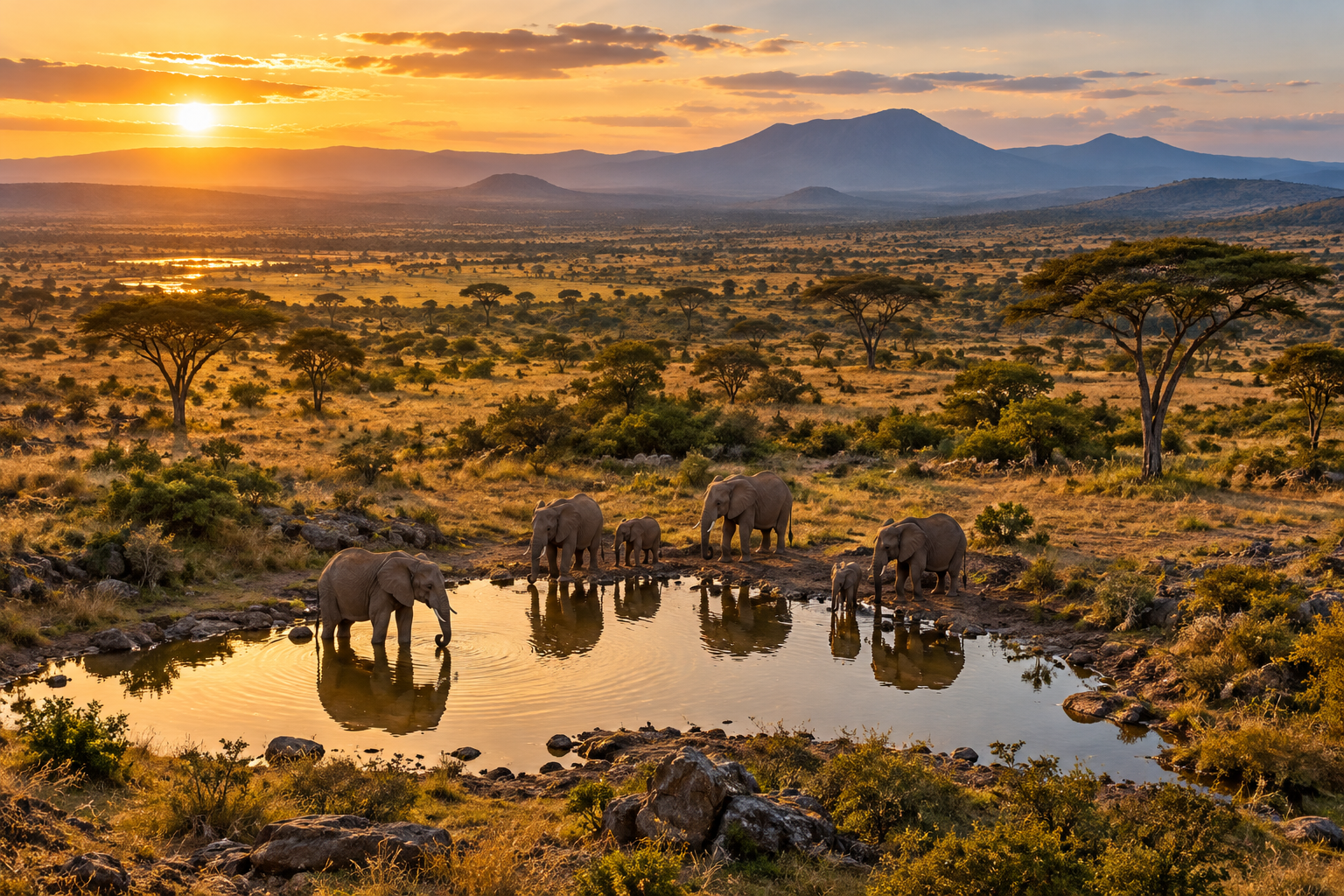
Africa's leading safari countries offer distinct wildlife habitats and viewing experiences.
Connectivity matters as much as location when documenting wildlife encounters or coordinating multi-park itineraries. A reliable safari eSIM ensures you stay connected across remote reserves without carrier switching or roaming fees, particularly useful when moving between Kenya's national parks or crossing into Tanzania. Namibia rounds out the top tier with Etosha's stark beauty and self-drive flexibility, attracting photographers seeking desert-adapted species against dramatic backdrops.
Each destination balances wildlife density, seasonal timing, and logistical ease differently. Understanding these trade-offs—from wet-season discounts to dry-season crowding, from guided camps to self-catering lodges—determines which country aligns with your priorities, whether that's witnessing river crossings, tracking rhinos on foot, or exploring without crowds.
Which Are the Best Countries for Safari in 2027?
Kenya, Tanzania, Botswana, South Africa, and Uganda represent the top tier for safari travel in 2027, each offering distinct wildlife experiences and ecosystems. Kenya leads with the Great Migration spectacle in the Maasai Mara from July through October, while Tanzania's Serengeti and Ngorongoro Crater deliver year-round game viewing with exceptional predator concentrations. Botswana's Okavango Delta provides exclusive, low-density camps accessible primarily by light aircraft, and South Africa combines the Big Five-rich Kruger National Park with malaria-free reserves ideal for families. Uganda stands apart for mountain gorilla trekking in Bwindi Impenetrable Forest, with permits costing $800 per person.
Zambia and Rwanda merit serious consideration for travelers seeking less-crowded alternatives. Zambia's South Luangwa pioneered walking safaris and maintains strict park capacities, while Rwanda's Volcanoes National Park offers gorilla encounters within two hours of Kigali. Namibia delivers dramatic desert-adapted wildlife in Etosha and the stark landscapes of Sossusvlei, though distances between sites require either self-driving or internal flights. Zimbabwe's Hwange National Park rivals Kruger in elephant populations, with over 40,000 recorded. Staying connected across these destinations requires planning—Safari eSIM options for Kenya eliminate physical SIM card swaps and activate within minutes of arrival, essential for coordinating remote lodge transfers and sharing real-time wildlife sightings.
Why Kenya and Tanzania Are Top Choices for First-Time Visitors
Kenya and Tanzania offer the most accessible safari infrastructure in Africa, with well-maintained road networks connecting major reserves, reliable lodging from budget camps to luxury tented suites, and English widely spoken across tourism circuits. Both countries maintain year-round flight schedules from North America and Europe into Nairobi and Kilimanjaro International Airport, and domestic carriers service smaller airstrips near prime wildlife zones. First-time visitors benefit from decades of established safari operations, vetted guide certification programs, and transparent pricing structures that reduce planning uncertainty.
The Maasai Mara and Serengeti form a continuous ecosystem hosting the annual wildebeest migration—roughly 1.5 million animals moving between July and October—making timing straightforward for those prioritizing this spectacle. Kenya's compact northern circuit places Amboseli, Lake Nakuru, and the Mara within driving distance, while Tanzania's southern parks like Ruaha and Selous remain quieter alternatives for visitors seeking solitude after a northern route. Practical considerations matter: Kenya uses the same electrical outlets as the UK, Tanzania requires a visa on arrival for most travelers, and both countries have adopted mobile connectivity that supports eSIM technology across major reserves, eliminating the need to purchase physical SIM cards at arrival terminals.
Could Botswana Be the Best Destination for a Quiet Luxury Safari?
Botswana has positioned itself as the premier choice for travelers seeking exclusivity and minimal environmental impact. The government caps visitor numbers through high-cost, low-volume tourism policies—concession fees in the Okavango Delta can exceed $150 per person per night before accommodations, effectively limiting crowds and preserving wilderness integrity. Private reserves like Moremi Game Reserve and Chobe National Park maintain strict vehicle quotas, so a single sighting rarely draws more than two or three Land Cruisers.
Feature | Botswana | Kenya | Tanzania |
|---|---|---|---|
Daily park fees (avg) | $150+ per person | $70–90 per person | $60–80 per person |
Vehicles per sighting | 2–3 maximum | 10–15 common | 6–10 typical |
Off-road driving | Prohibited nationwide | Allowed in private conservancies | Allowed in Serengeti |
Elephant population | 120,000 (Chobe alone) | 36,000 nationwide | 60,000 nationwide |
Tourism model | High-cost, low-volume | High-volume, varied budgets | Mid-volume, mid-range focus |
The country's seasonal flooding transforms the Okavango into a labyrinth of channels accessible only by mokoro (traditional dugout canoe) or light aircraft, creating isolation that Kenya's Masai Mara and Tanzania's Serengeti cannot match during peak months. Botswana prohibits off-road driving entirely, a regulation that protects fragile grasslands but also means guides must work harder to position guests for photographic opportunities. Predator density rivals East Africa—Chobe supports an estimated 120,000 elephants, the continent's largest population—but the experience skews toward longer stays in fewer camps rather than the circuit-style itineraries common elsewhere. Connectivity remains limited outside lodges, so securing a reliable eSIM before departure ensures you can coordinate logistics when signal does appear.
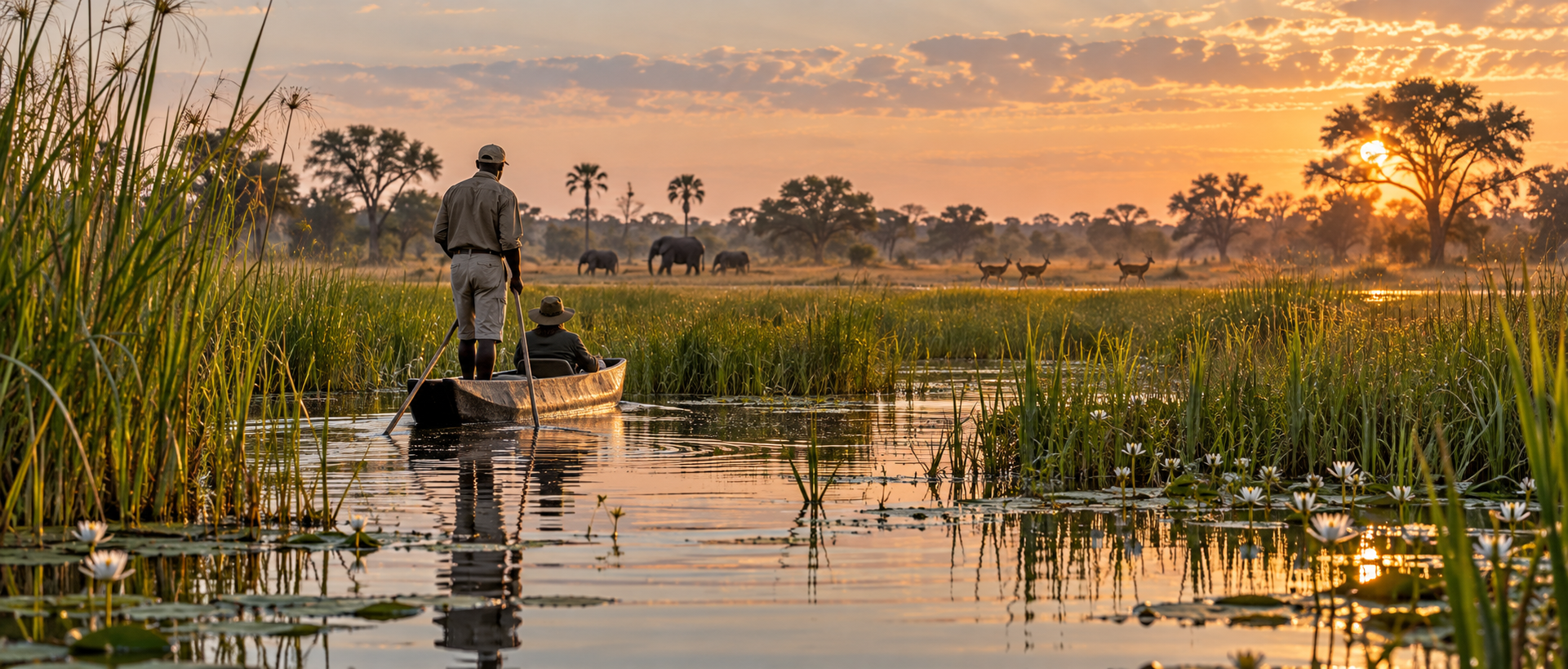
Seasonal flooding turns Botswana's Okavango Delta into a network of waterways explored by mokoro.
What Makes South Africa, Namibia, Uganda, Zambia, and Zimbabwe Different?
South Africa delivers safari variety on a scale few countries match: Kruger National Park anchors the northeast with year-round Big Five viewing, while private concessions like Sabi Sands and Timbavati offer walking safaris and off-road tracking. The country pairs wildlife with infrastructure—paved highways, malaria-free reserves in the Eastern Cape, and wine routes within a half-day's drive of Cape Town. Accessibility comes at the cost of crowds during peak season, but the trade-off favors travelers seeking comfort and logistical ease, especially those combining safari connectivity with urban stays.
Namibia stands apart for desert-adapted species and photographic light. Etosha National Park concentrates elephant, lion, and black rhino around artificial waterholes from June to October, while Sossusvlei's red dunes and Skeleton Coast's seal colonies extend the itinerary beyond classic savanna. Self-drive routes dominate: visitors navigate gravel roads between camps without guides, a model that rewards preparation but isolates you from ranger expertise.
Uganda and Rwanda share mountain gorilla permits, but Uganda holds the monopoly on chimpanzee tracking in Kibale Forest and tree-climbing lions in Queen Elizabeth National Park. Zambia's walking safaris in South Luangwa pioneered guide-led bush immersion, and its Victoria Falls season runs opposite Zimbabwe's—Zambia shows the falls at full spate in April, Zimbabwe reveals the basalt gorge in October. Zimbabwe's Hwange National Park rivals Kruger for elephant density, with fewer vehicles per sighting and lower per-day costs than Botswana's northern circuits.
When Is the Best Time to Visit Kenya and Tanzania in 2027?
Kenya and Tanzania reward careful timing. The dry season from June through October delivers optimal game viewing as animals concentrate around permanent water sources and sparse vegetation makes wildlife easier to spot. July and August bring the Great Migration river crossings in the Masai Mara, while September and October offer excellent conditions with fewer crowds. January through March provides a second dry window—green landscapes from short rains, newborn calves across the Serengeti, and calving season that draws predators in extraordinary numbers.
Shoulder months like late May and November carry rain risk but unlock significant savings on lodges and flights, often 30–40% below peak rates. The Serengeti stays accessible year-round, though April's long rains turn certain tracks impassable. Northern Tanzania's Ngorongoro Crater performs consistently across all months due to its enclosed ecosystem. Travelers planning multi-country itineraries should coordinate timing with cross-border logistics and connectivity needs, particularly when moving between Kenya's Masai Mara and Tanzania's Serengeti reserves where network coverage shifts at the border.
Book lodges inside premier reserves at least eight months ahead for June–October travel. Mobile camps that follow the migration fill even earlier. Weather patterns have grown less predictable in recent years, so confirm current conditions with ground operators two weeks before departure rather than relying solely on historical averages.
Which Safari Style Fits Your Budget: Affordable, Luxury, or All-Inclusive?
Safari costs vary wildly by country and season. Budget travelers can find group camping safaris in Kenya's Maasai Mara starting around $150–$250 per person per day, including park fees, transport, and basic meals. Mid-range lodges in Tanzania's northern circuit typically run $300–$500 per person per night with full board, while Botswana's remote camps command $800–$1,500+ per night due to limited supply and exclusive concessions. South Africa offers the widest price range: self-drive safaris in Kruger with budget accommodation can drop below $100 per day, whereas private game reserves adjoining the park charge $600–$1,200 per night all-inclusive.
All-inclusive packages bundle park fees, meals, game drives, and sometimes flights between camps, simplifying budgeting but reducing flexibility. Kenya and Tanzania dominate this model, with operators offering seven-day packages from $2,500 to $8,000+ depending on lodge standard. Luxury safaris in Zambia, Zimbabwe, and Uganda lean toward smaller camps with high guide ratios and walking safaris, reflecting conservation levies and lower tourist volume. Staying connected with a Safari eSIM helps you compare real-time pricing, book last-minute availability, and coordinate multi-country itineraries without roaming fees eating into your budget.
How Do You Choose Between a National Park, Private Conservancy, and Wildlife Reserve?
National parks like Kenya's Maasai Mara and Tanzania's Serengeti are government-managed protected areas with strict regulations, larger visitor numbers, and lower daily fees—typically $60–$80 per adult. You'll share sightings with other vehicles, especially during peak migration months, but the wildlife density and accessibility make them ideal for first-time visitors. Parks enforce set entry and exit times, and you must stay on designated tracks.
Private conservancies—such as Ol Pejeta in Kenya or the Selous reserves in Tanzania—operate under community or investor ownership with limited bed capacity, often capping daily visitors at 15–20 vehicles across thousands of acres. You pay higher conservancy fees (usually included in lodge rates starting around $400–$600 per night), but gain off-road driving privileges, night drives, walking safaris, and longer hours in the bush. Wildlife sightings feel more exclusive, and your fees directly fund conservation and local communities.
Wildlife reserves, including Kenya's Samburu or Zimbabwe's Mana Pools, sit between the two: they allow controlled tourism and some off-road access, but with fewer lodges than parks and more flexibility than strict wilderness zones. Choose parks for variety and value, conservancies for privacy and immersive game viewing, and reserves when you want specialized ecosystems—like Samburu's arid-adapted species—without the crowds of flagship parks. Staying connected with a safari eSIM helps you coordinate multi-reserve itineraries and share real-time sightings without roaming fees.
How Can You Support Responsible Wildlife Tourism and Conservation?
Choose operators that pay conservation fees directly to protected areas and employ local guides from neighboring communities. When you book through lodges affiliated with the Kenya Wildlife Service or Tanzania National Parks, entrance fees fund anti-poaching patrols, habitat restoration, and wildlife corridors. In South Africa, revenue from visitors to SANParks properties supports endangered species programs and community upliftment initiatives that reduce human-wildlife conflict.
Look for camps that partner with African Parks, which manages 22 protected areas across the continent through public-private agreements that prioritize ecological integrity and local benefit-sharing. Verify that your tour operator follows IUCN guidelines for wildlife viewing distance and group size—reputable companies never allow off-road driving in fragile ecosystems or harassment of nesting or denning animals. Stay connected responsibly during your trip with a Safari eSIM for Kenya so you can share real-time conservation stories without contributing to plastic SIM waste. Avoid facilities that offer walking with lions, elephant rides, or any direct contact with predators; these attractions typically involve cub separation and abusive training methods that contradict genuine conservation goals.
How Can You Stay Connected During a Safari?
Remote lodges, national parks, and mobile camps rarely offer reliable Wi-Fi, and traditional roaming plans from carriers like Verizon or AT&T can cost $10–$15 per day in Kenya and Tanzania. An eSIM solves both problems: you buy a data-only plan before departure, install it on your unlocked iPhone or Android device, and connect to local networks like Safaricom or Vodacom the moment you land. No physical SIM card, no carrier shop visits, no surprise bills.
For a two-week safari spanning Kenya and Tanzania, a Safari eSIM for Kenya with 10–20 GB typically costs $20–$40 and covers the Masai Mara, Amboseli, Nairobi, and most game reserves. If you're crossing into Tanzania for the Serengeti or Ngorongoro, choose a regional eSIM that works in both countries or stack two single-country plans. Coverage extends to main roads and popular parks, though signal drops inside dense forests and true wilderness zones like the Selous or northern Botswana.
Before you leave, confirm your phone is eSIM-compatible and carrier-unlocked. Install the profile over Wi-Fi at home, then activate it on arrival. Keep your home SIM active for calls and two-factor authentication, and toggle data roaming off to prevent accidental charges. Offline maps from Google or Maps.me work without signal, and most guides use WhatsApp to coordinate game drives once you're connected.
Safari Planning FAQs: Visas, Safety, Packing, Booking Timelines, and Choosing a Reputable Operator
Most East African countries require a visa on arrival or an e-visa applied for online before departure. Kenya and Tanzania both offer e-visas processed within three to seven business days; Uganda issues single-entry tourist visas at Entebbe airport. South Africa, Botswana, Namibia, and Zimbabwe have different requirements depending on your passport—U.S. citizens enter Botswana and South Africa visa-free for stays under ninety days, while Zimbabwe requires a visa on arrival. Apply early if traveling during peak season, and carry printed copies of approval letters even when using electronic documents.
Safari destinations are generally safe for tourists, but standard travel precautions apply. Book with licensed operators affiliated with national tourism boards or conservation bodies such as the African Wildlife Foundation or Tusk Trust. Check government travel advisories before departure, purchase comprehensive travel insurance that covers medical evacuation, and confirm your lodge or camp provides malaria prophylaxis guidance. Pack lightweight neutral clothing, a wide-brimmed hat, high-SPF sunscreen, binoculars, and a Safari eSIM for Kenya to stay reachable across remote reserves without swapping physical SIM cards. Book lodges and flights six to twelve months ahead for high-season travel—July through October in Kenya and Tanzania, May through September in Botswana—and confirm final payments and transfer logistics at least thirty days before arrival.
Kenya eSIM from $4.99 — Safari eSIM
Unlimited data on Safaricom. Built for safari travelers.
Get Safari eSIM